Modern astronomy
The turn of the 20th century came with technical advances that vastly improved our capabilities, and with major discoveries that deeply transformed our vision and understanding of the universe.
Astrophotography
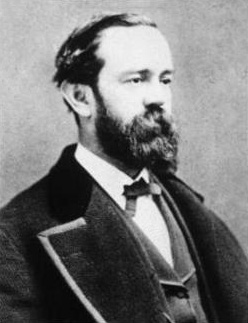
The first photographs of the Moon, the Sun and the stars date from the mid-19th century, with in particular the first “daguerreotype” of the Moon by John William Draper in 1840, then the revealing of sunspots by Léon Foucault and Hippolyte Fizeau. But it was in 1880 that Henry Draper (John William’s son) took the first photograph of the Orion Nebula. It was then realized that the accumulation capabilities of the photographic plate made it possible to reveal details and objects that had been inaccessible until then. Photography became predominant and quickly replaced visual observations in the professional world.
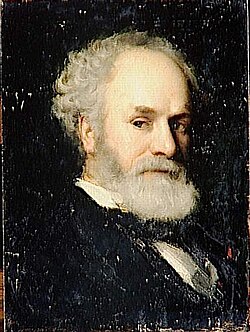
Then in 1887, the Paris Observatory launched, at the initiative of its director Ernest Mouchez, a vast project to chart the sky based on photographic plates. It was an international project that enlisted 18 observatories around the world. Nearly 5 million stars would be precisely positioned this way. It is worth noting that the analysis work was mostly carried out by women, the famous human “computers” (who were also called the “dames de la Carte du Ciel” in the context of this project). This project would last until the 1960s without ever being truly completed (it was eventually superseded by more modern charting methods).
Spectroscopy
Until then, sky observation had been almost exclusively relying on the visible domain. But other possibilities of observation emerged in the 19th and 20th centuries. As early as 1666, Isaac Newton had discovered that “white” light could be broken down into colors. This “spectrum” of colors goes beyond visible light, notably into the “infrared” domain discovered by William Herschel in 1800. Then ultraviolet light was discovered in 1801, as was the wave nature of light by Thomas Young.
In 1814, Joseph Von Fraunhofer discovered “absorption lines” in the solar spectrum, then invented the spectroscope the following year. In 1859, the chemist Robert Bunsen and the physicist Gustav Kirchhoff understood the relationship between chemical elements and emission of precise wavelengths. This was the birth of spectroscopy. Then in 1868, Jules Janssen analyzed the spectrum of sunlight and discovered a new chemical element in it: helium. Spectroscopy made it possible to know the chemical composition of stars and nebulae at a distance, which revolutionized the understanding of their structure and formation.
The Universe Beyond the Milky Way
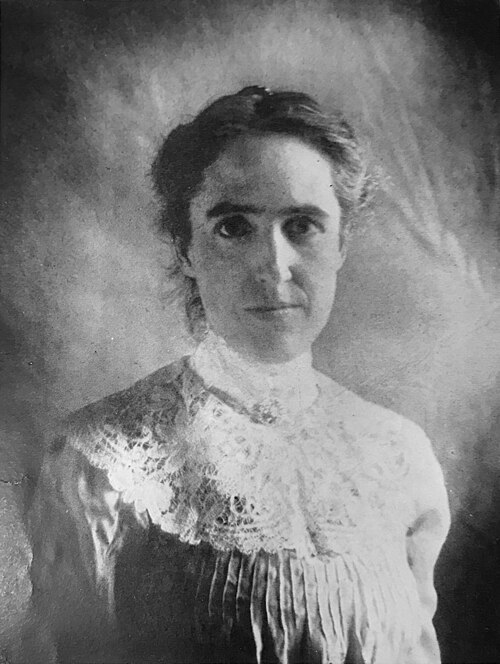
In 1875, our Milky Way was understood as a dense sructure of stars and other objects. This sructure is flattened, in rotation, with our Solar System located toward its center. But the nature of nebulae was debated. Were they part of the Galaxy or outside of it? Harlow Shapley built a detailed charting of the Milky Way, measuring distances thanks to the distance/luminosity relation of Cepheid variable stars, discovered by Henrietta Leavitt, allowing to provide the first realistic estimates of its gigantic size (it was then estimated at 300,000 light-years). Shapley also determined that its center is located in the direction of Sagittarius, and therefore that the Earth is rather on its periphery.
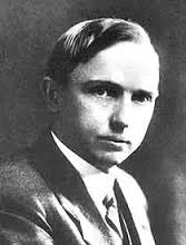
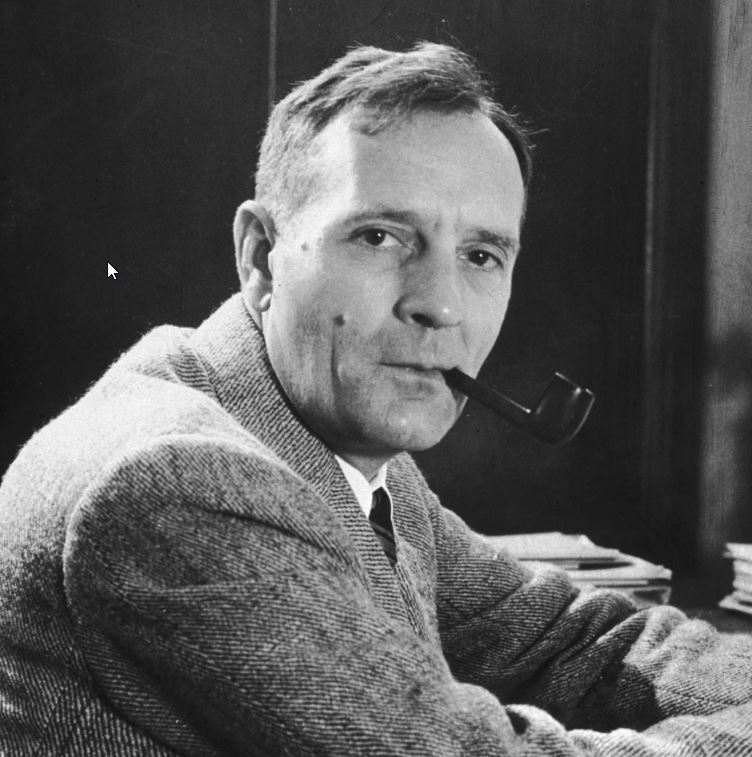
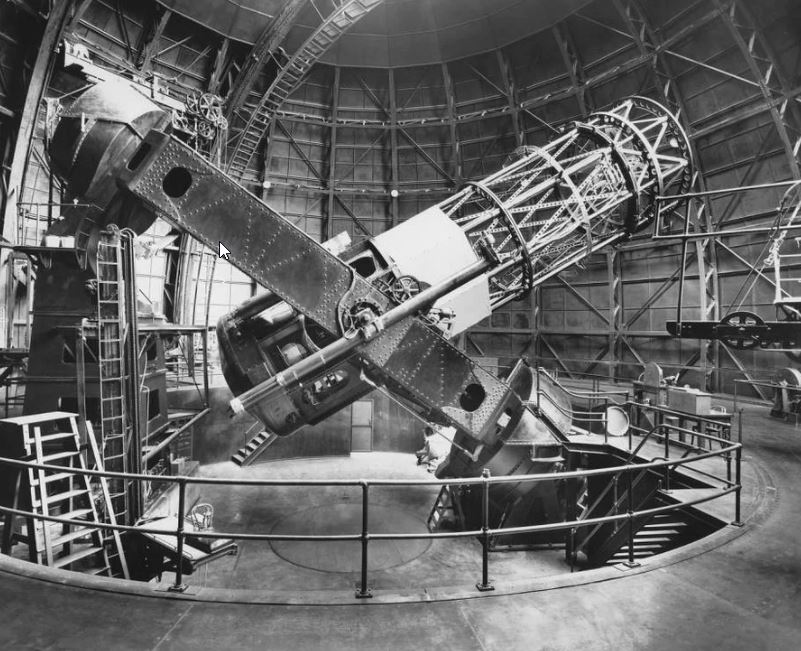
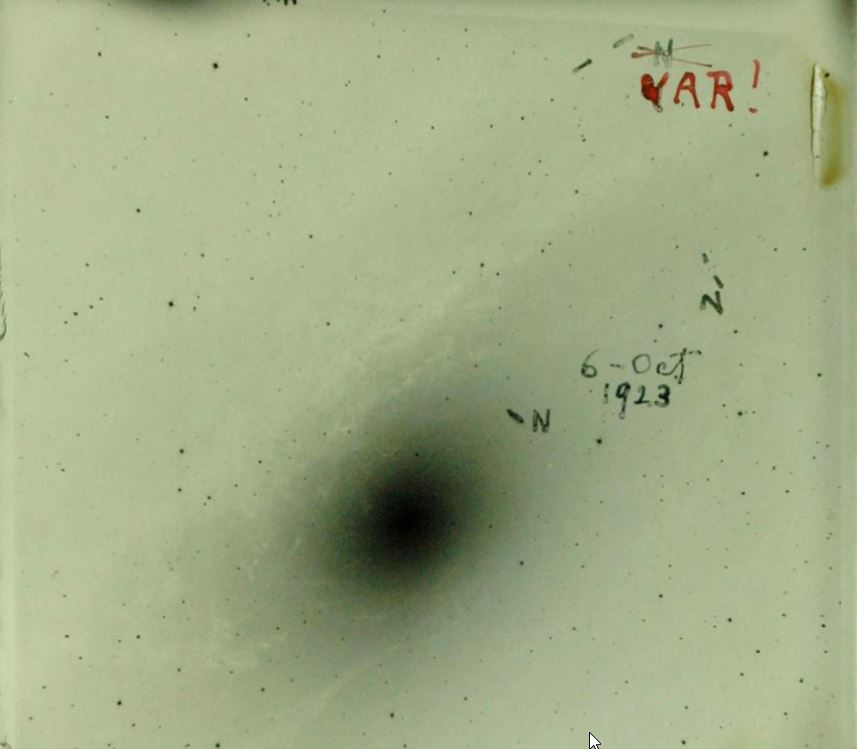
But Shapley believed that the Milky Way was our entire Universe, containing all the observed objects, whereas other astronomers such as Heber Doust Curtis believed in particular that the spiral nebulae were external. This “Great Debate” would last for some time and would only find its conclusion in 1924 thanks to the observations of Edwin Hubble, who established, again using Cepheids, that the Andromeda and Triangulum Nebulae were very distant from our own Milky Way. Curtis’s “Island Universes” were now, like our own, Galaxies.
Relativity and the Big Bang
Meanwhile, Michelson and Morley discovered in 1887 that light has a constant speed, independent of direction. Albert Einstein turned this measurement info a fundamental postulate and derived from it Special Relativity and then General Relativity. This theory revolutionized our understanding of the very nature of the Universe, with the concept of space-time, and redefined what gravitation is, superseding Newton’s laws which had prevailed for 300 years.
Relativity indeed made it possible to account for several observational anomalies that Newton’s laws could not explain, such as the precession of Mercury’s orbit. It also postulates that even light is deflected by the deformation of space-time caused by a gravitational well, which was confirmed by Arthur Eddington in 1919 during a solar eclipse, experimentally validating General Relativity. The change brought by this theory is comparable to the Copernican revolution, as it paved the way to a modeling of the entire universe.
Several scientists such as Karl Schwarzschild then attempted to interpret this brand-new theory. Schwarzschild postulated in 1916 a solution to Einstein’s equations which implies a gravitational singularity, which would later be called a “black hole“.
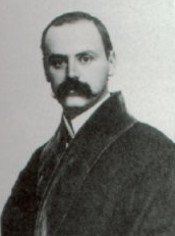
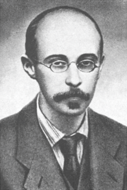
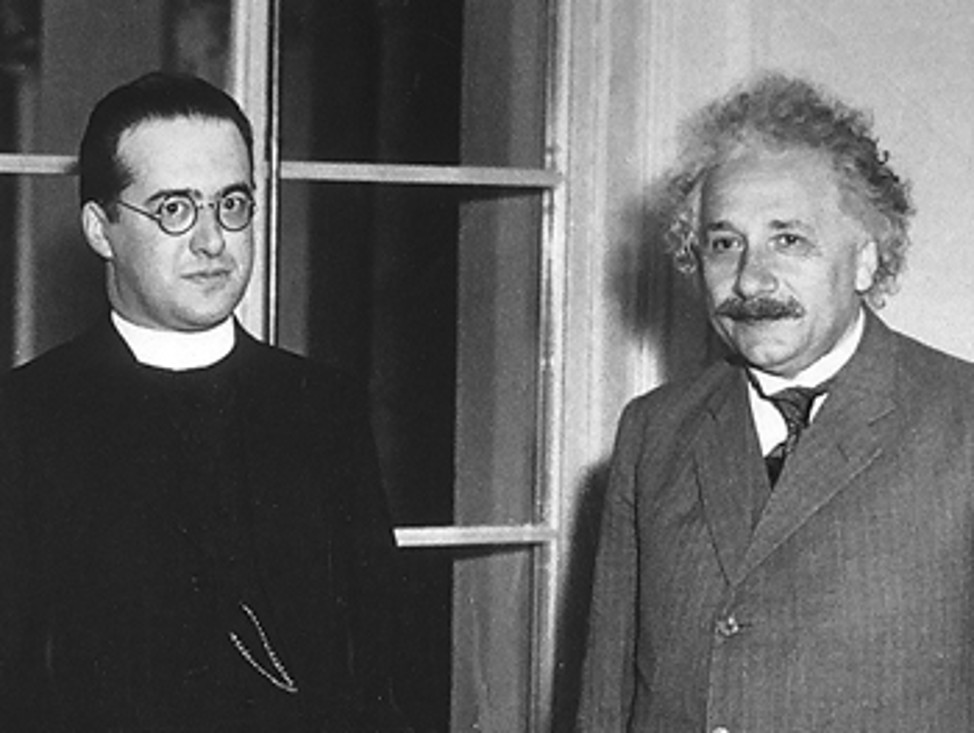
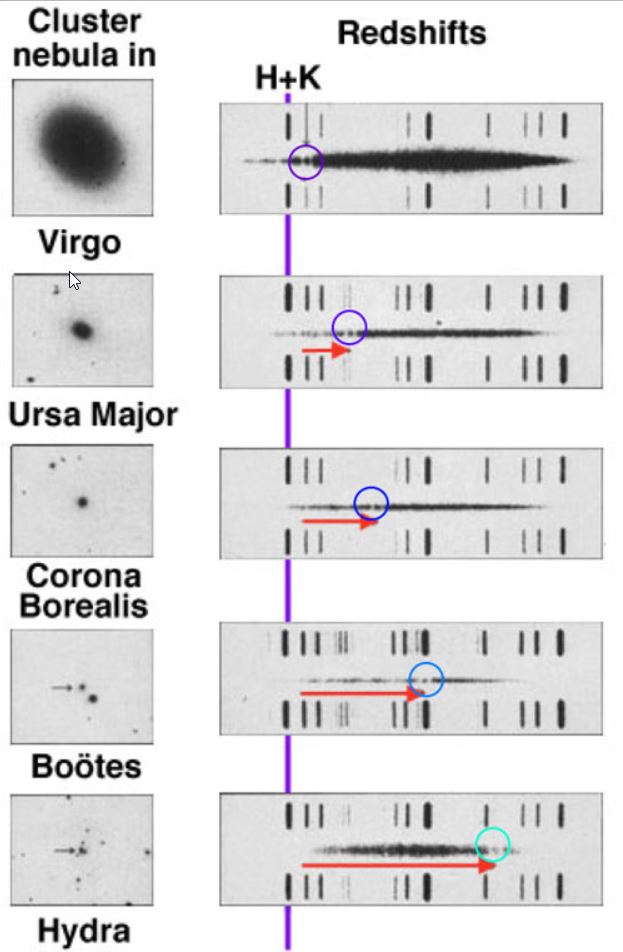
But the most striking breakthrough also resulted indirectly from Vesto Slipher‘s observations, who observed the “redshift” of the light spectra of galaxies as early as 1912. This phenomenon, reminiscent of the Doppler effect (the one that makes a police siren change pitch depending on whether the car approaches or moves away), suggests that galaxies are moving away from us, and even from one another.
It turns out that the interpretation of the theory of General Relativity also leads to considering a “non-stationary” universe, which may be “expanding”. This concept was developed by Alexandre Friedmann in 1922. ThenGeorges Lemaître had the idea of playing the scenario backwards to suggest a universe that was denser and hotter in the past. He then made the hypothesis of a “Primeval Atom“. This scenario would long be refuted by several astronomers including Fred Hoyle, who in 1949 mocked the concept on BBC radio, dubbing it the “Big Bang“. Yet this model would be developed and confirmed over time. It was strengthened and enriched by George Gamow in 1948 (with his student Ralph Alpher), by incorporating primordial nucleosynthesis.
Developments in quantum physics and theoretical astrophysics then indicated that at the very beginning of its formation, the density of matter must have been such that light could not propagate through space. Only 380,000 years after the “Big Bang” would the decreasing density finally have allowed photons to travel freely.
Ralph Alpher and Robert Hermann then predicted that the luminous “flash” resulting from this first light should still be observable today in the form of a cold residue, precisely because of the expansion…
Radioastronomy
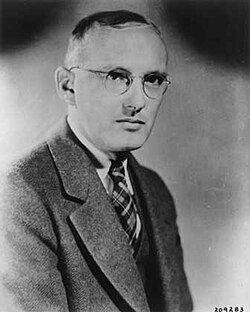
In 1932, Karl Jansky discovered radio waves of galactic origin, followed byGrote Reber. These discoveries revealed a whole series of objects that had not yet been detected. In particular neutron stars, including “pulsars“, discovered by Jocelyn Bell in 1967, then “quasars“, the first of which was identified in 1963 by Maarten Schmidtt. Those are very energetic radio sources associated with a nearly point-like optical counterpart (hence the name “quasi-stellar object”). It would be established later that these are active nuclei of very distant galaxies, among the most energetic objects in the observable Universe.
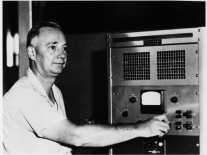
A pulsar was notably be discovered at the heart of the Crab Nebula _ the remnants of the supernova of the year 1054, the very one that Chinese astronomers had meticulously recorded in their annals of the Middle Ages. To learn more about the history of the Crab Nebula, it’s >>this way<<.
Then in 1964, two engineers working on radio transmissions for the Bell laboratory, Arno Penzias & Robert Wilson, identified a “background noise” in their measurements that they could not eliminate. They had just discovered the cosmic microwave background, the famous luminous “flash” of Alpher and Herman, so much stretched by expansion that it is observed in the radio domain! The Big Bang model held a beautiful proof of its validity!
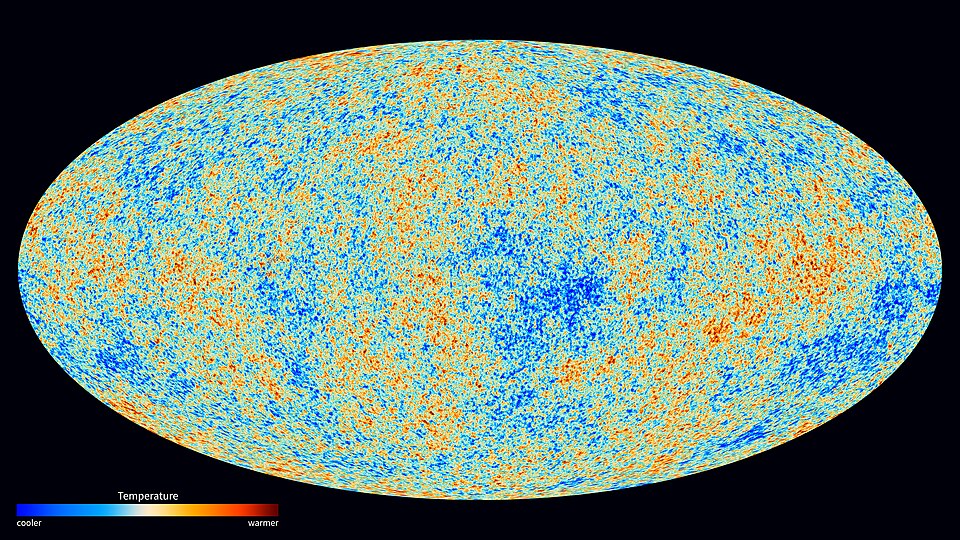
So, in the second half of the 20th century, the universe is gigantic, it has a history of its own, it is several billions of years old, and it has not always existed — at least not in its present form. But the story is not over yet…