The Copernican Revolution
The European Renaissance was a wave of revolutions, and astronomy was part of it, gradually separating itself from astrology to become a true science. This revolution was driven by several key figures, who progressively built up the foundations of modern astronomy.
There were first of all the pioneers, such as Tycho Brahe, who observed a supernova in 1572. His rigorous approach, based on observation and measurement, allowed him to challenge the immutability of the sky beyond the lunar orbit, and thus the Aristotelian dogma.
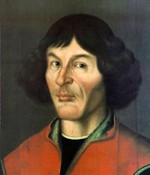
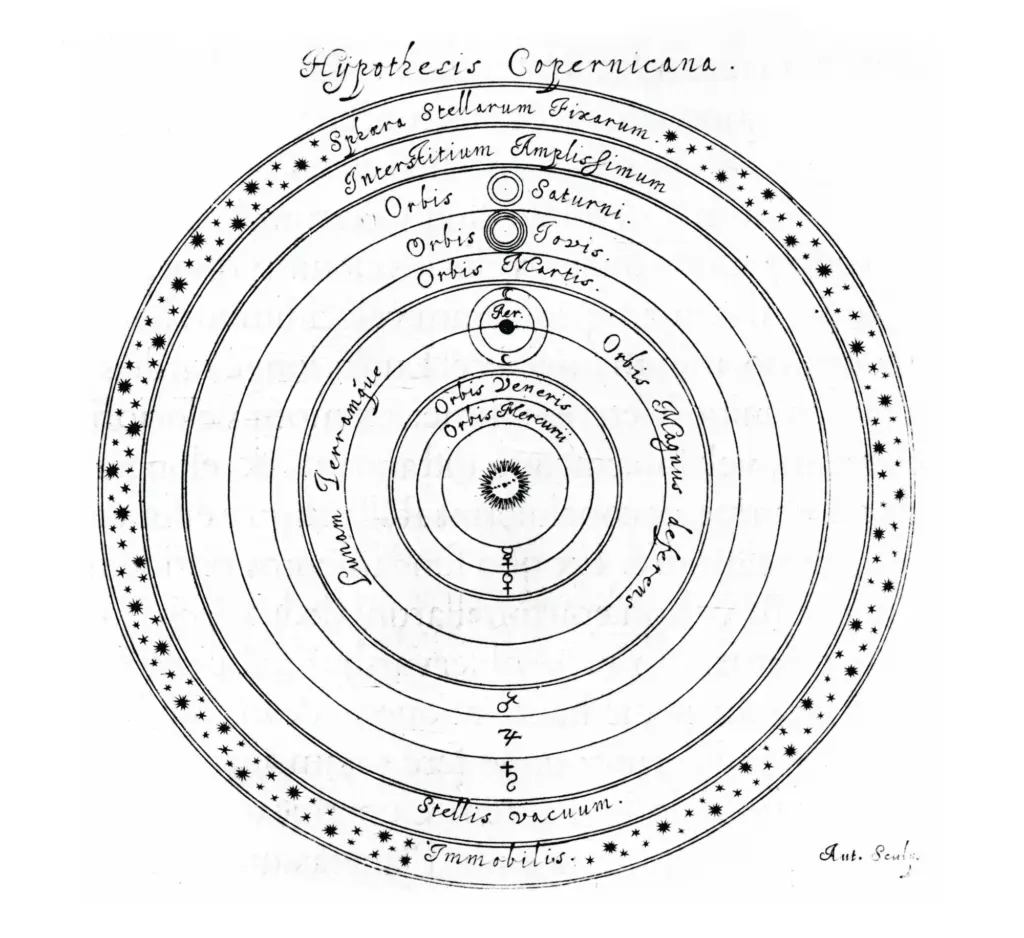
But above all, it was Nicolaus Copernicus who published in 1543, shortly before his death, his “De revolutionibus orbium coelestium“, establishing a model in which the Sun is at the center of the Universe, around which the Earth revolves just like the other planets. This would later be called the Copernican revolution.
The Dominican friar Giordano Bruno was a true visionary. Extending Copernicus’s theory, he had the concept of an infinite universe, where each star is like the Sun, thus harboring as many potential worlds. His theory would be deemed as a blasphemy by the Church, and would serve as one of the charges among others that would earn him a condemnation by the tribunal of the Inquisition, and he would end up burned at the stake in 1600.
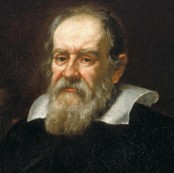
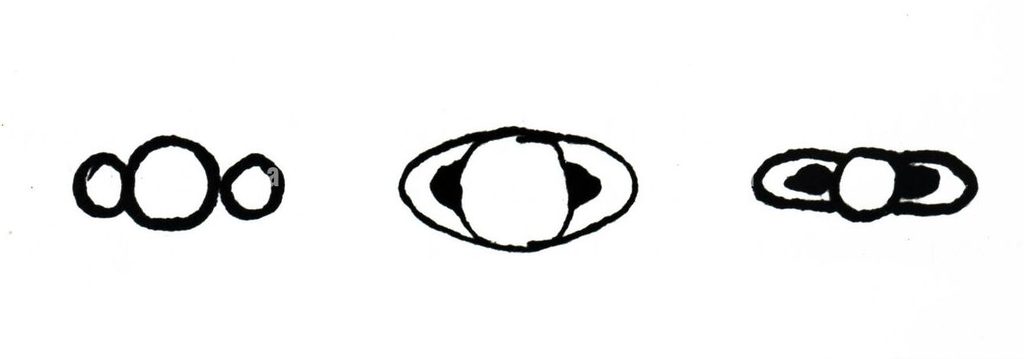
Barely more cautious than Giordano Bruno in the face of the virulence of the supporters of geocentrism, Galiléeo was a major contributor of his time in various fields (mathematics and physics, in particular on gravity and the motion of bodies). He improved the spyglass, used at sea, to turn it into an instrument for observing the sky: the astronomical telescope, or refractor. What he discovered by using it simply revolutionized the view of celestial bodies such as the Moon, Jupiter or Saturn. In particular, Jupiter has satellites, just like the Earth! Galileo supported the Copernican model, notably through his work Dialogue on the Two Great Systems of the World, but would also come into conflict with the Church.
A telling fact of this era: astronomy even asserted itself at the top of the Church. The Julian calendar, in use since antiquity, had accumulated a drift of about 10 days from the seasons, having failed to correctly account for the actual length of the tropical year. In 1582, Pope Gregory XIII therefore promulgated a reform based on the calculations of astronomers — the astronomer and mathematician Luigi Lilio, and then the Jesuit Christophorus Clavius – giving birth to the Gregorian calendar we still use today. France would not adopt this calendar until the end of 1582 (Monday, December 20 followed by Tuesday, January 1, 1583), and the Protestant countries much later (such as Great Britain in 1752).
Mastering the Solar System
During the Renaissance, several notable astronomers reached for a finer modeling of the orbits of objects around the Sun.
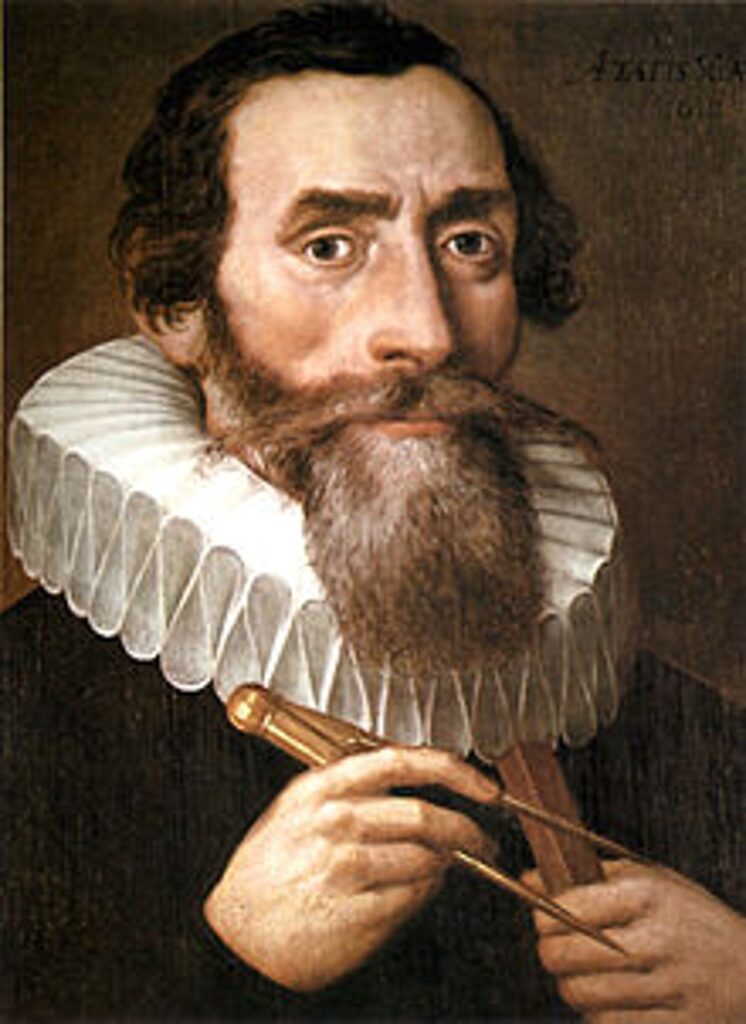
Johannes Kepler, building on the Copernican theory and the observations of Tycho Brahe, modeled the orbits of the planets around the Sun. The mathematical laws he stated in 1609 and then in 1619 are still applicable today for the main orbital calculations.
Isaac Newton generalized this modeling by defining the law of universal gravitation in 1687, which explains through the same mechanism the orbits of the planets and the fall of any body in a gravitational field, on Earth or in the Universe. Newton would also develop the reflecting telescope (based on mirrors), whose optical design still bears his name.
Newton also discovered the decomposition of light into colors through a prism, which would later play a crucial role in astronomy.
Then Edmond Halley, a multidisciplinary scientist, applied Newton’s laws in 1705 to calculate the return of the comet observed in 1682. He would die before he could confirm his theory, but the return was indeed observed in 1759 as predicted, demonstrating the extra-lunar and periodic nature of certain comets, which strengthened the Copernican model. Finally, Léon Foucault, with his pendulum experiment in 1851, provided experimental proof of the Earth’s rotation.
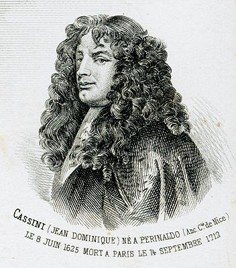
In the 17th century, the European monarchies took an interest into science and astronomy – not out of humanism, but because certain challenges such as navigation had become crucial since the discovery of the New World, and astronomy was essential to it. The french Académie Royale des Sciences was in competition with the Royal Society, and the Paris Observatory, founded in 1667, was in competition with the one in Greenwich. Its first director, Jean-Dominique Cassini, would greatly improve knowledge of the solar system, notably through the study of Jupiter and Saturn (the division between its rings would bear his name). He also carried out a first precise measurement of the Earth-Sun distance in 1672. Among its other directors, we shall also mention François Arago, who strongly supported the research of his time.
The outer planets
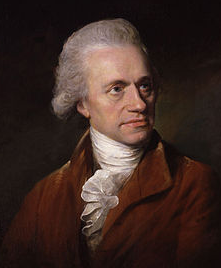
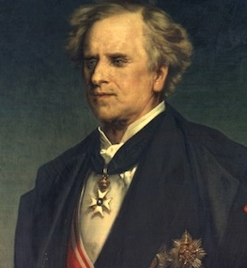
Then progress accelerated in 1781 with the discovery of Uranus by William Herschel. Repeated observations and calculations showed that it was a new planet. However, the calculations also revealed an anomaly in its orbit with respect to Newton’s laws, which was eventually explained by the presence of an even more distant planet, whose position would be determined by Urbain le Verrier in 1846. This was Neptune, discovered by Johann Galle based on Le Verrier’s indications.
It was the first time that the existence of a celestial body was determined (through calculation) before it was observed, definitively establishing the scientific approach of astronomy. Arago would say that “M. Le Verrier saw the new star at the tip of his pen”. Le Verrier’s calculations turned out to be inaccurate, but the predicted position was precise enough to allow the discovery. It is worth noting that the English astronomer John Couch Adams had also calculated the position of Neptune in parallel, though with less precision.
The observation of Neptune’s orbit would also reveal anomalies that would lead to the hypothesis of a ninth planet. It was thought to have been discovered in 1930, when Clyde Tombaugh discovered Pluto at the Flagstaff Observatory in Arizona. But the more recent discovery of several trans-Neptunian objects would reclassify Pluto as a Kuiper Belt object in 2006. However, several of these small objects are orbiting in resonance, which suggests the presence of a massive body. “Planet X”, the hypothetical ninth planet of our solar system, is still the subject of ongoing research…
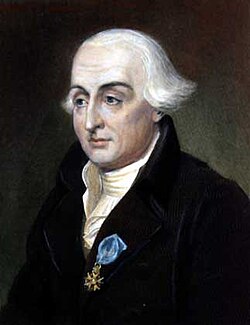
In parallel with these discoveries, the dynamics of the Solar System would be greatly refined, first in 1788 by Lagrangeand his Mécanique analytique, which reformulated Newtonian mechanics. He had previously demonstrated in 1772 the existence of gravitational equilibrium points, widely used today to position the great space observatories. We also owe him the explanation of the librations of the Moon.
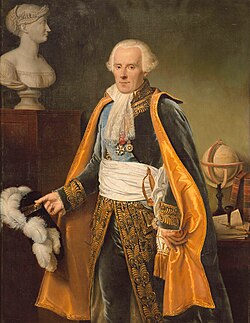
Alongside him, Laplace published the Treatise on Celestial Mechanics in the early 19th century. This work provided a powerful mathematical tool for predicting the motions of all the bodies of the solar system, including their mutual perturbations. Astronomy is now definitively separated from astrology. During a presentation to Napoleon, the latter asked Laplace: “You have written this great book on the system of the world without mentioning God even once?”, to which Laplace replied: “Sire, I had no need of that hypothesis.”