In use
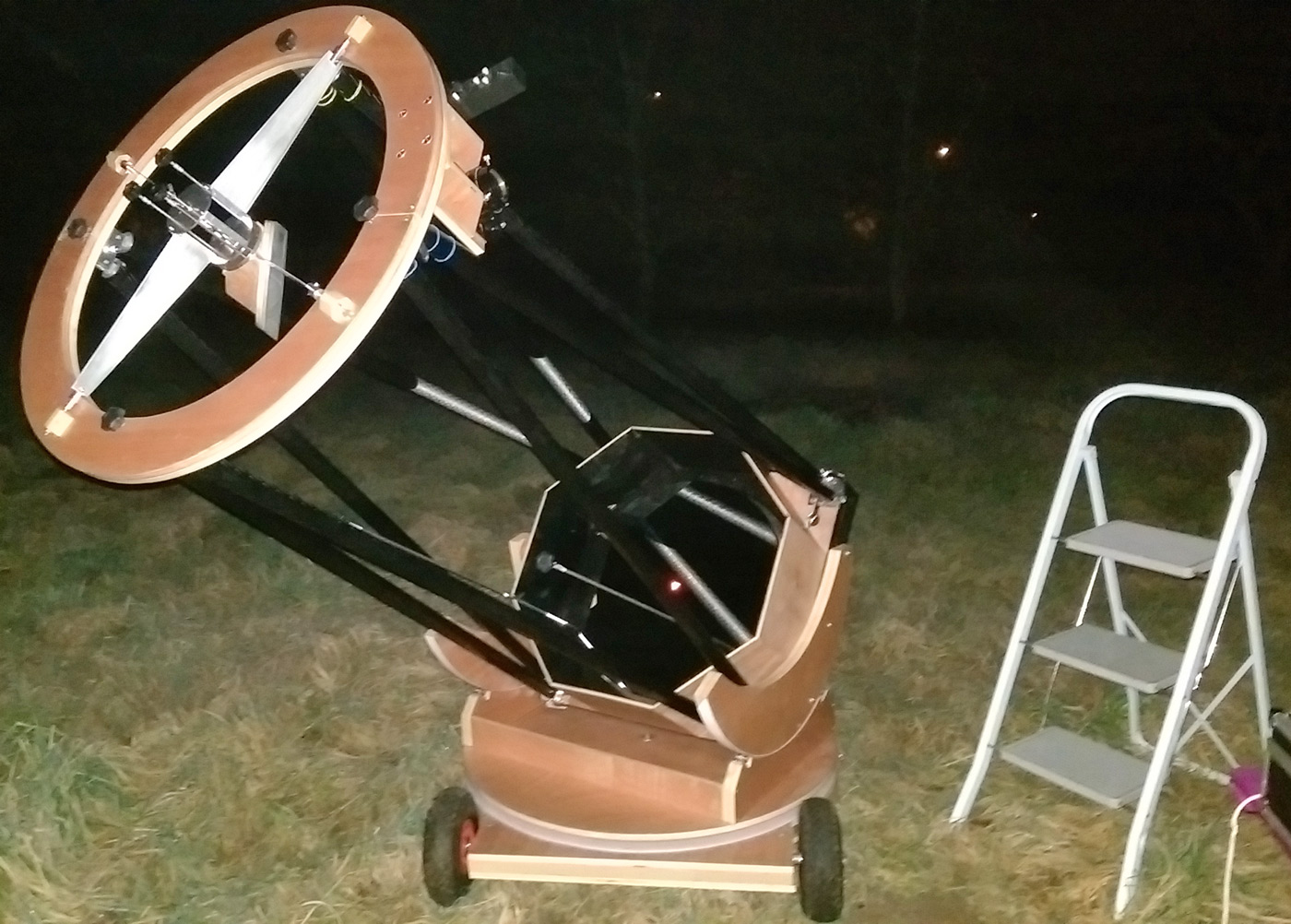
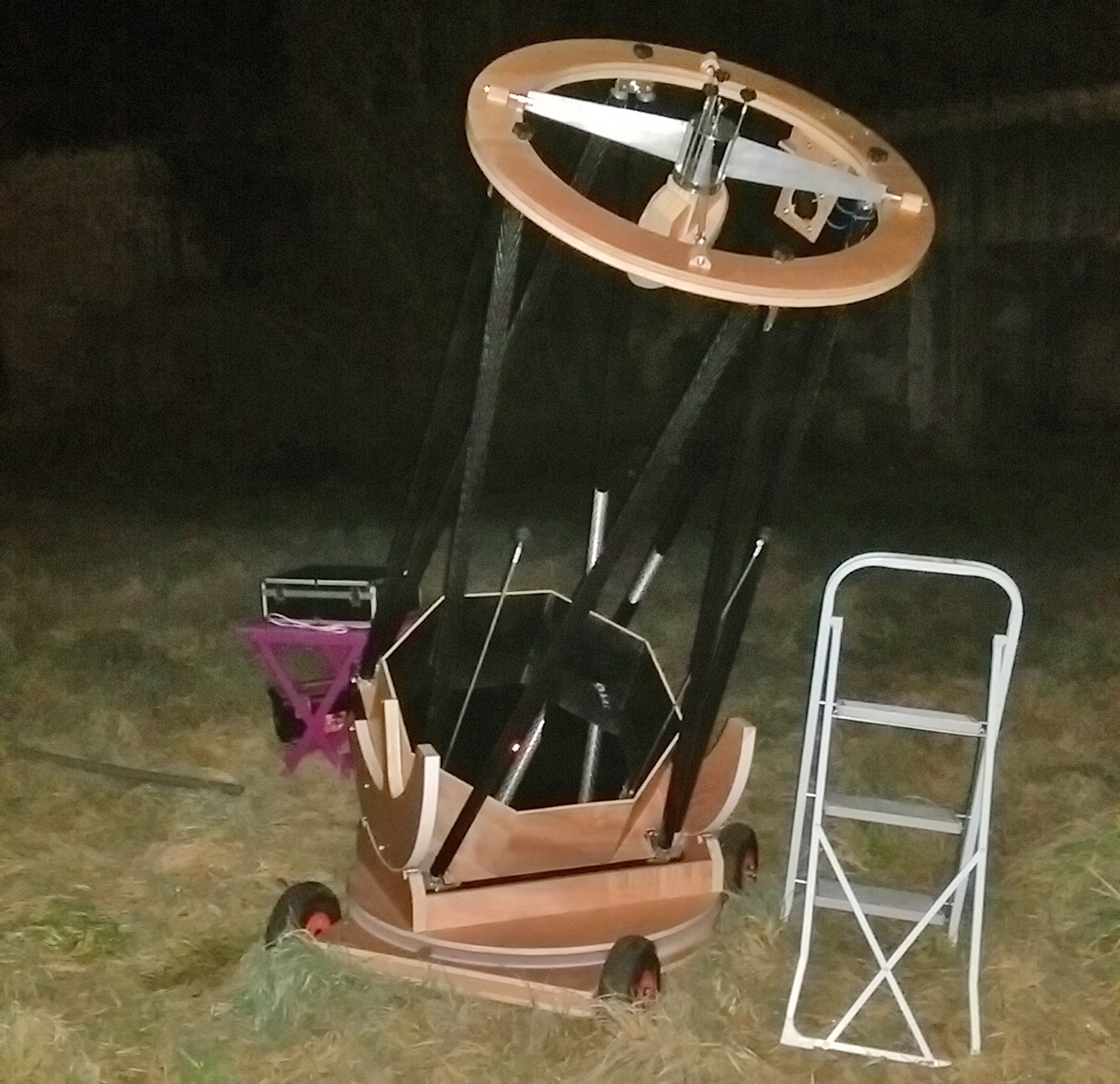
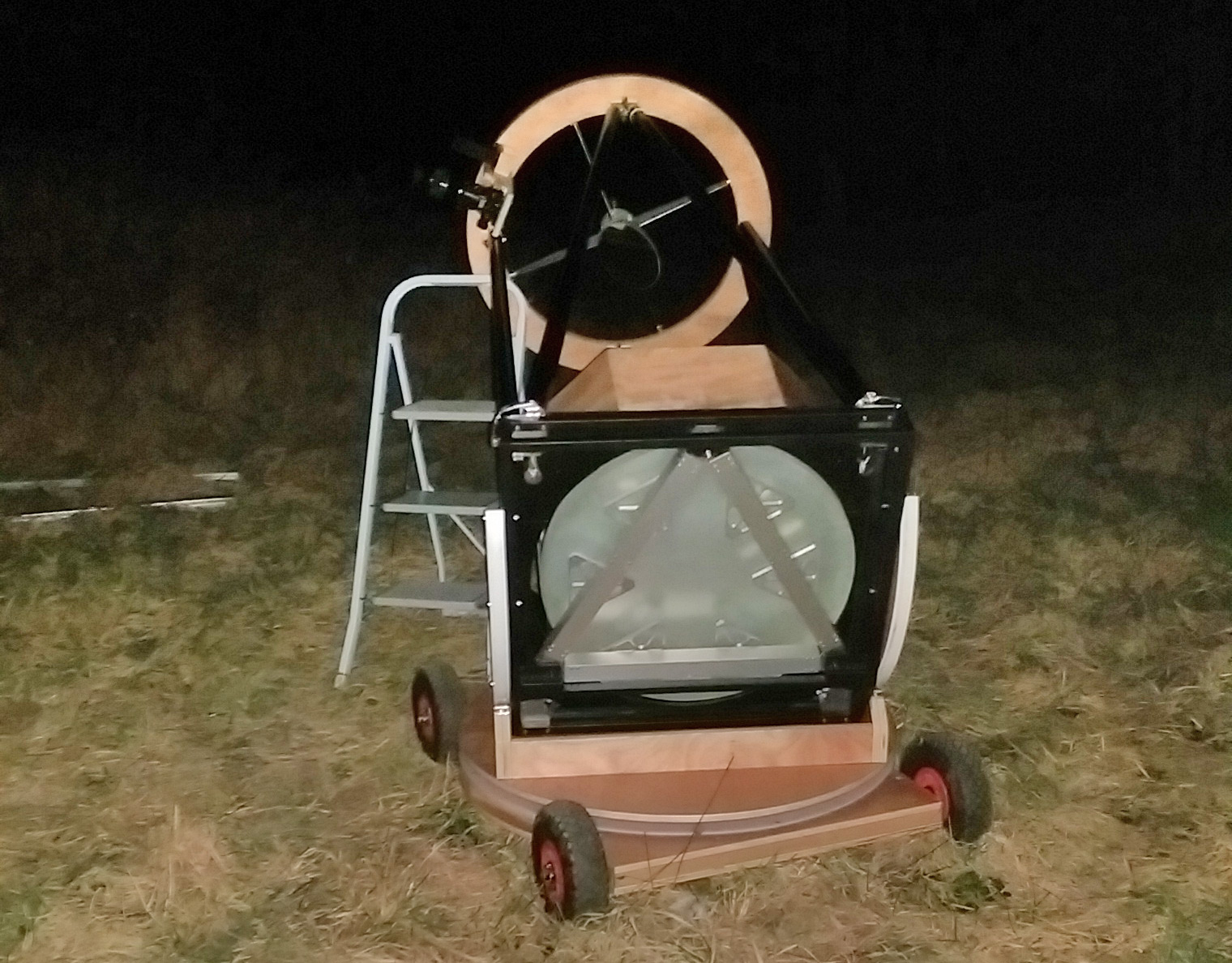
The first light took place with a temporary assembly, so it wasn’t possible to assess what we were observing—at most, we could evaluate the focus. The first “real” outing was an opportunity to check several aspects: collimation of the primary and secondary mirrors, collimation stability during altitude and azimuth movements, ease of use in the field, etc.
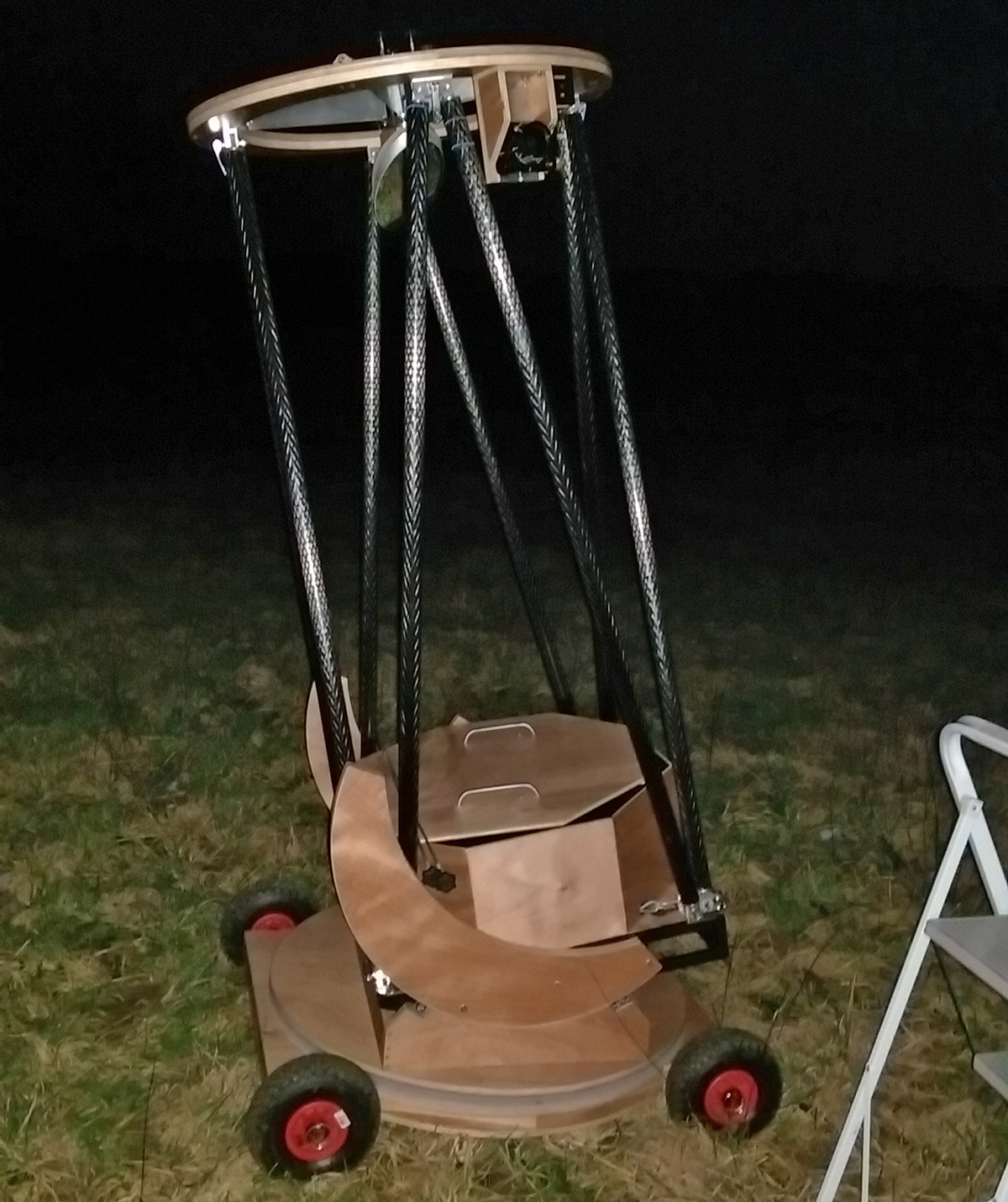
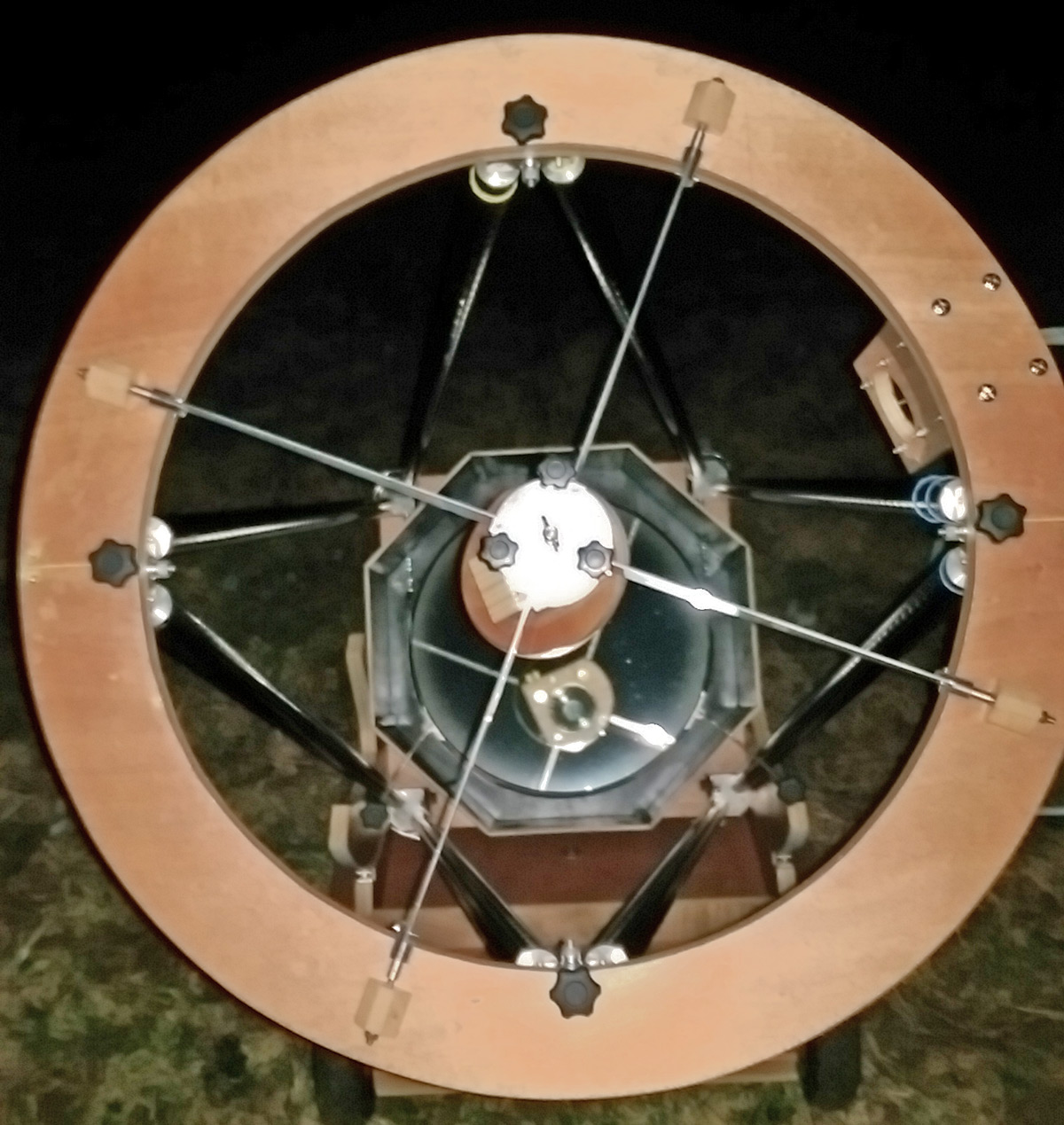
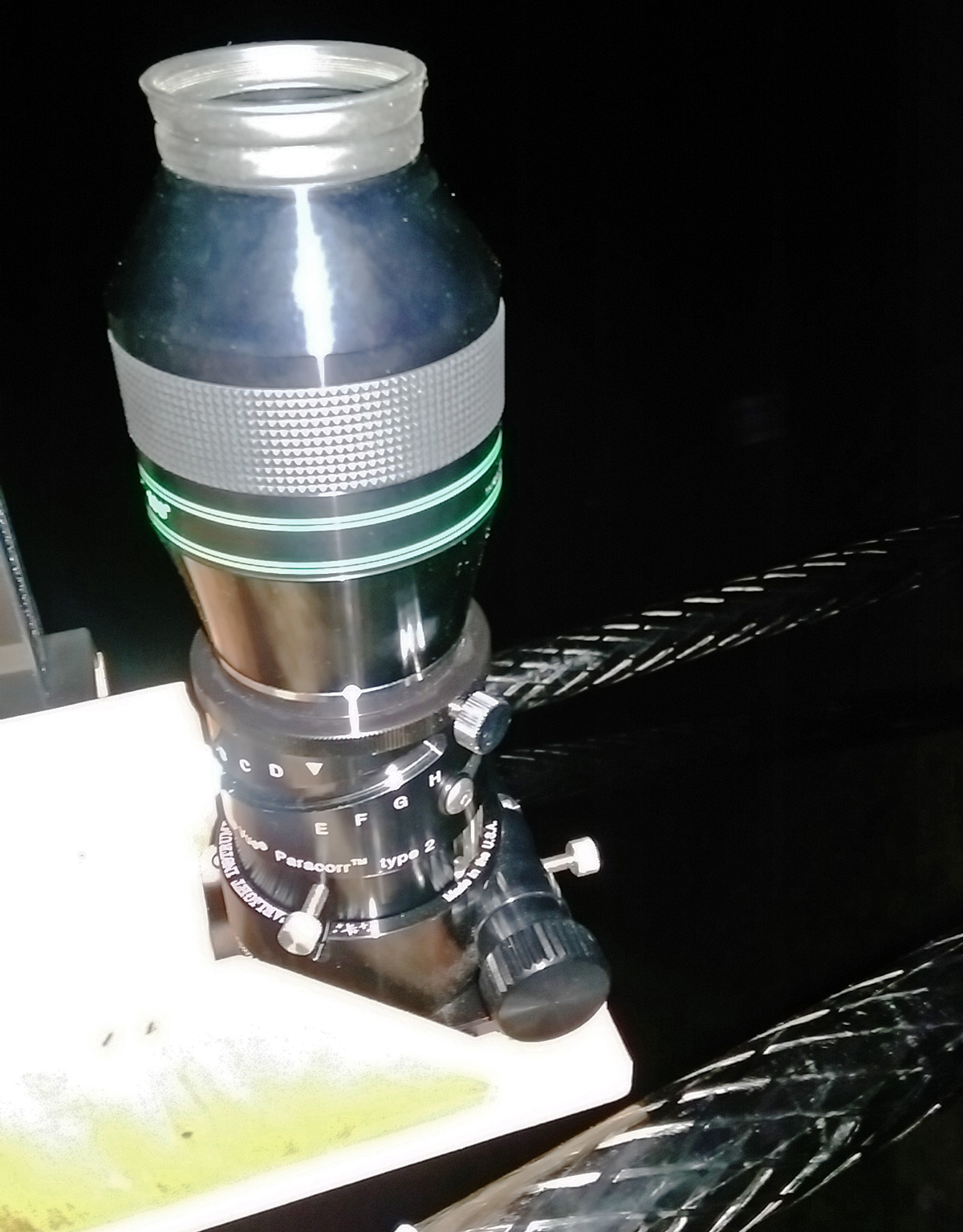
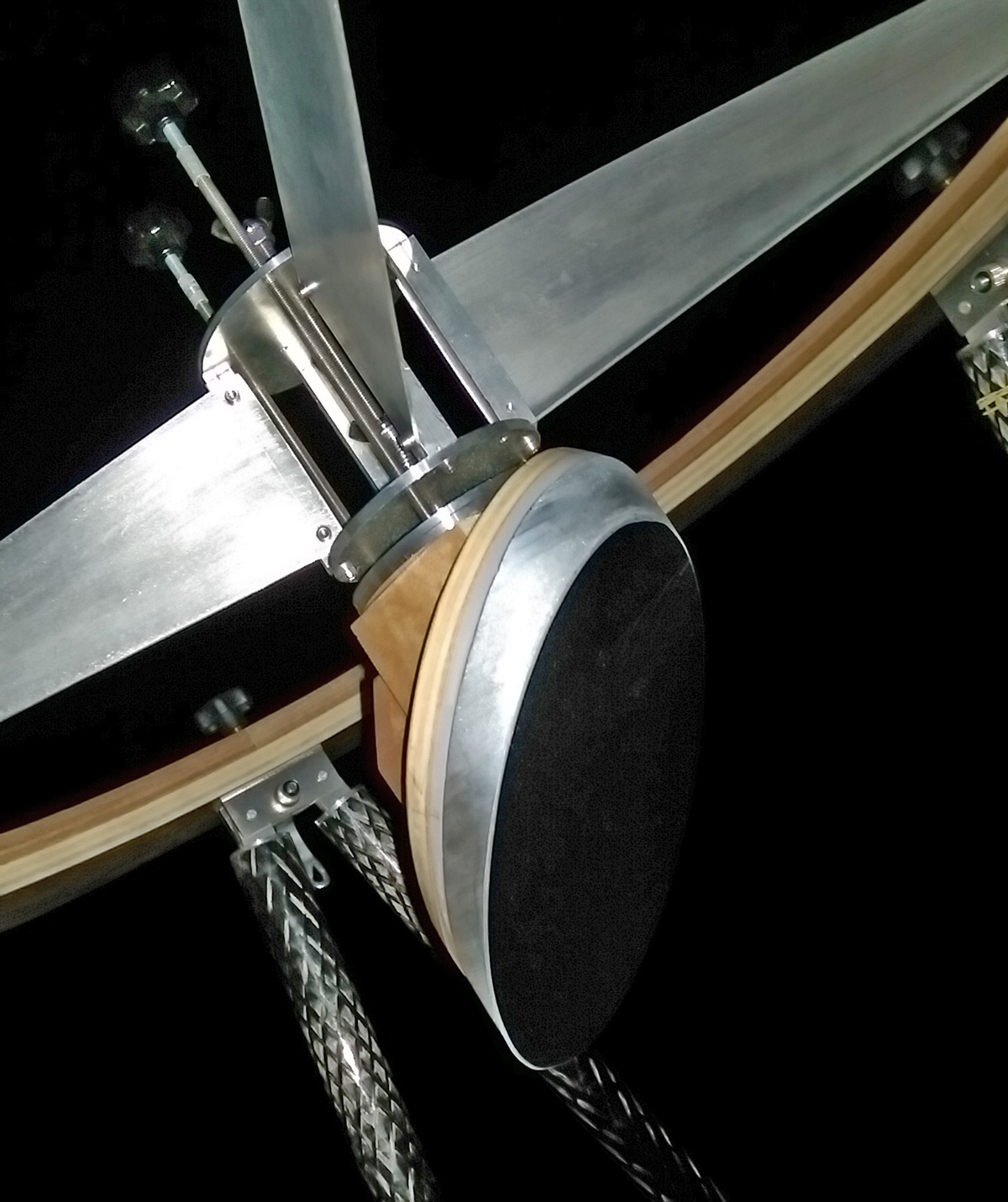
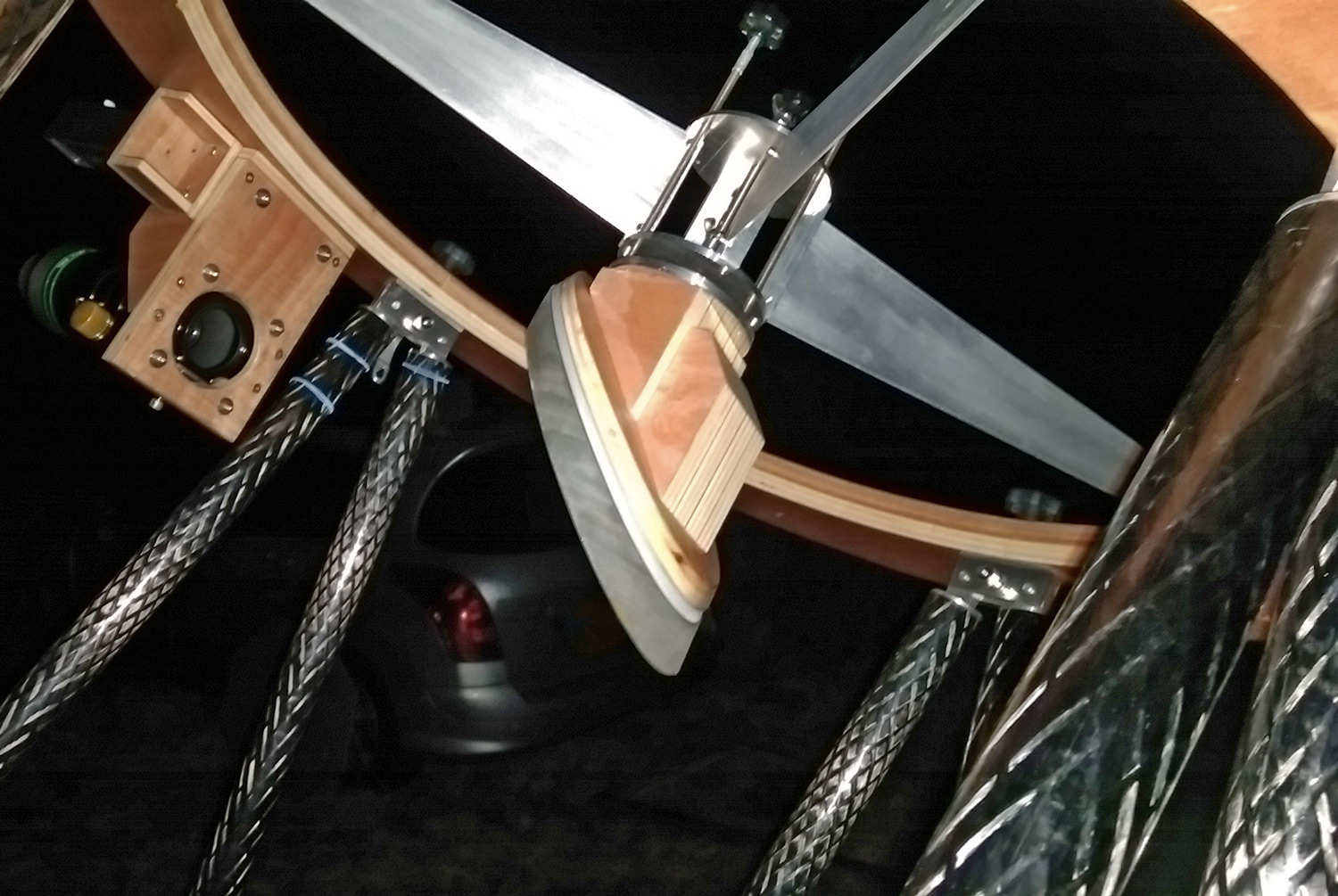
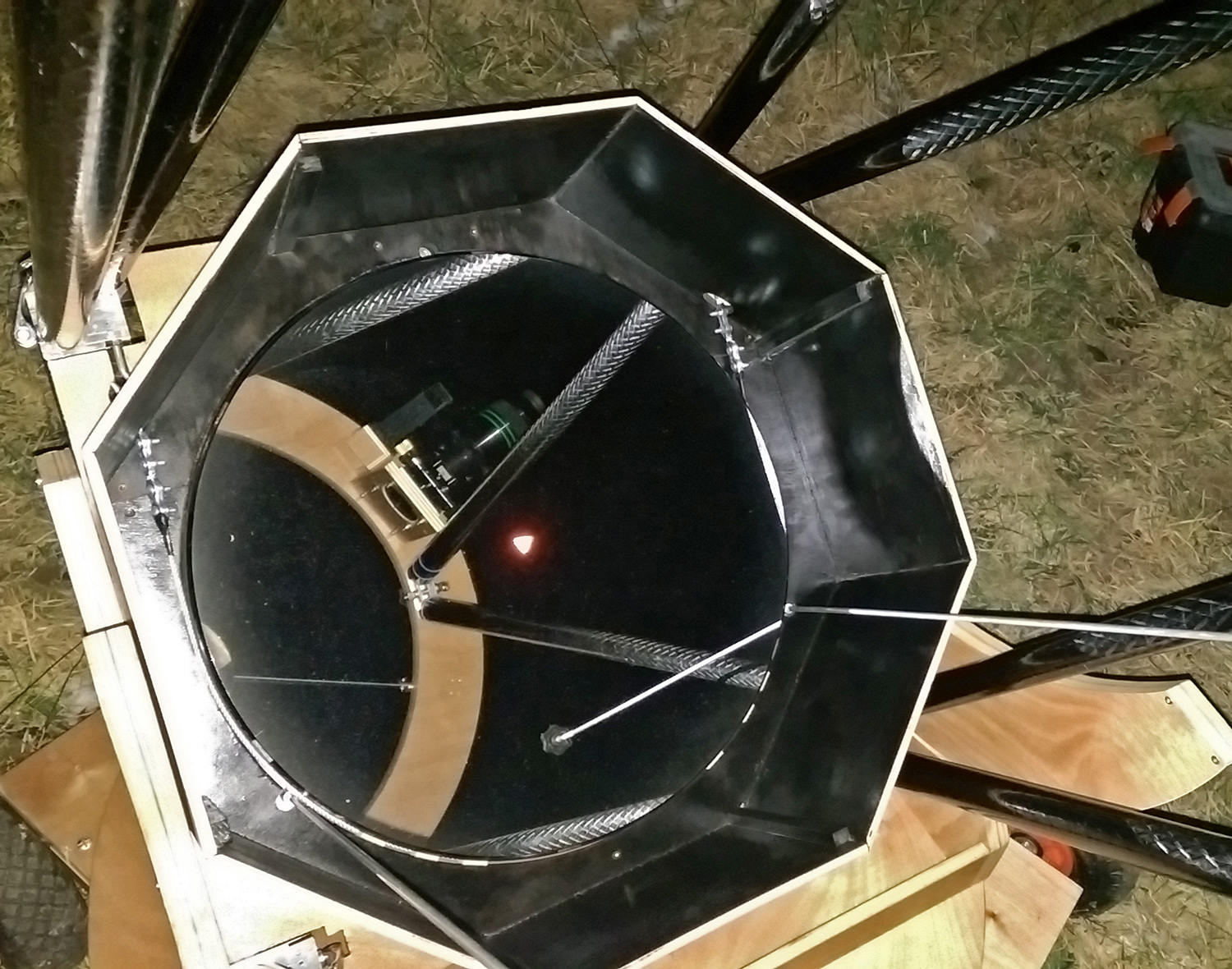
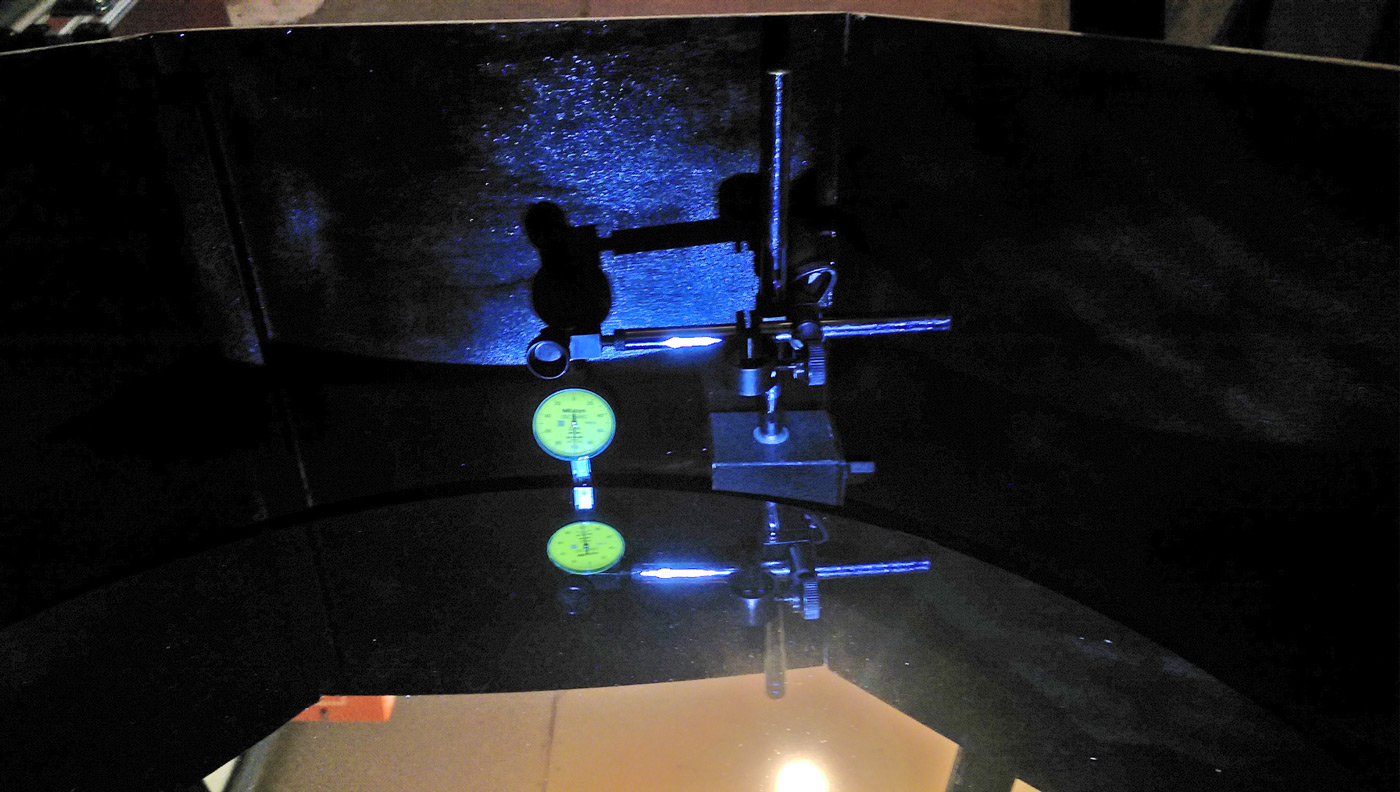
In all these aspects, the telescope lives up to its promises. Collimation is quite smooth and can be done on a star thanks to the rods, which are within reach when aiming through the eyepiece. The handling is very smooth, with no hard spots. I still need to add brakes to fully enjoy it, but the experience is already quite pleasant even without them. Assembly is a real pleasure. While the first tests had me somewhat worried because the tubes didn’t stay in place well, in the final version, the secondary cage fits without any issues. The cable seemed to hold its length well when moving from zenith to horizon, and I confirmed with a comparator a drift of about 0.3mm, which, in my humble opinion, is very acceptable. The rigidity of the carbon structure is also surprising, and the optical tube is handled like a monolithic element with great ease. Finally, the secondary mirror didn’t give me any dew issues, even though I was in fairly humid conditions. We’ll have to see how it performs in the long run, but the polystyrene plate under the secondary seems to be doing its job.
The first real observation session is detailed here. It allowed me to get an idea of the potential, but also the delicacy of this optical tube. An F/D 3.3 is sensitive. Very sensitive… You really need good collimation, stable temperature, and a cooperative sky to get the full potential out of this beast. For deep-sky objects, the light flux is definitely there—no doubt about it. Now I need to fine-tune the adjustments and improve the lateral support of the mirror, which leaves something to be desired. Once I do that, I should achieve nominal performance with this 600mm.

use_01
use_02
use_03
use_06
use_04
use_07
use_08
use_09
use_10
use_11
Transport
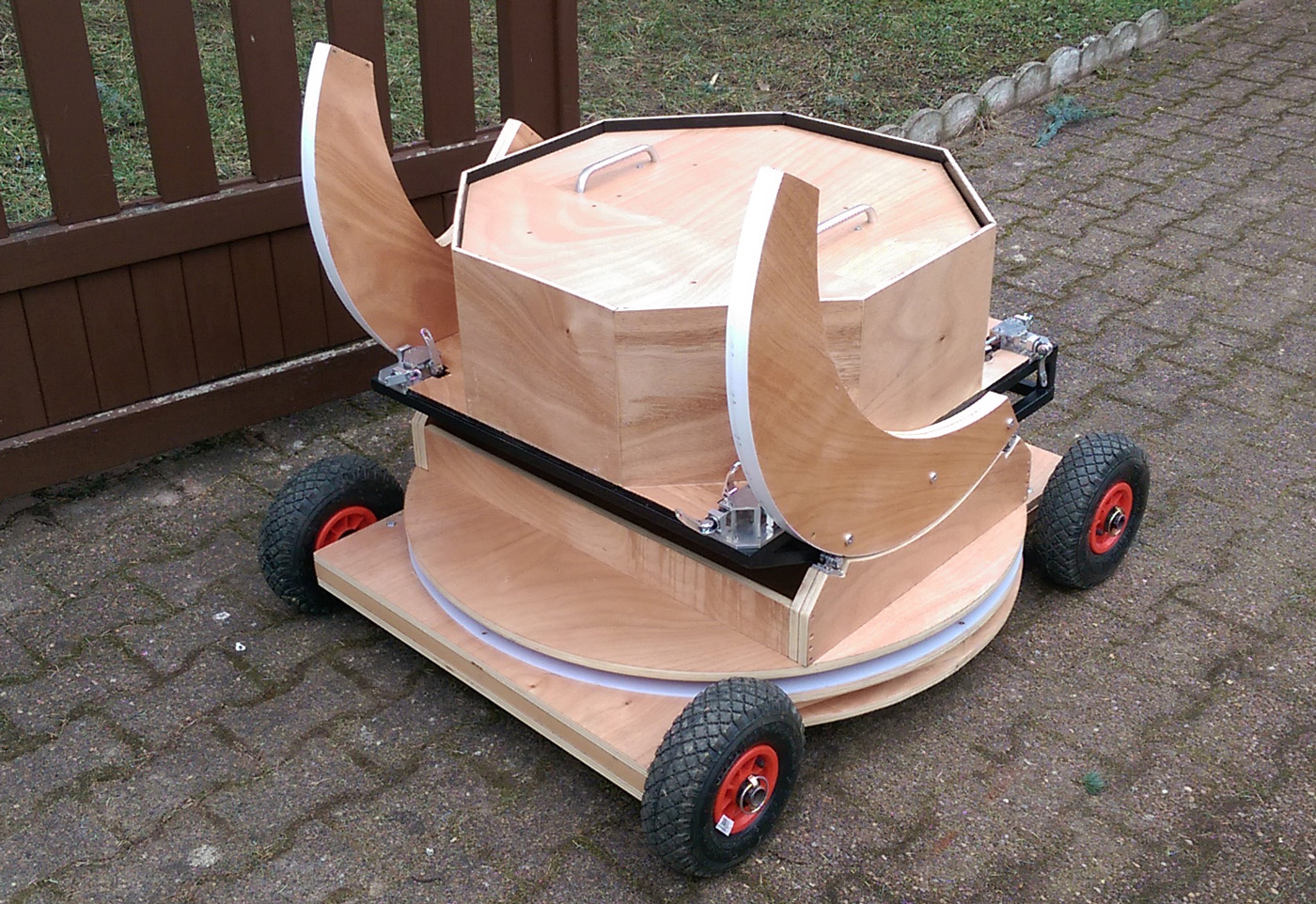
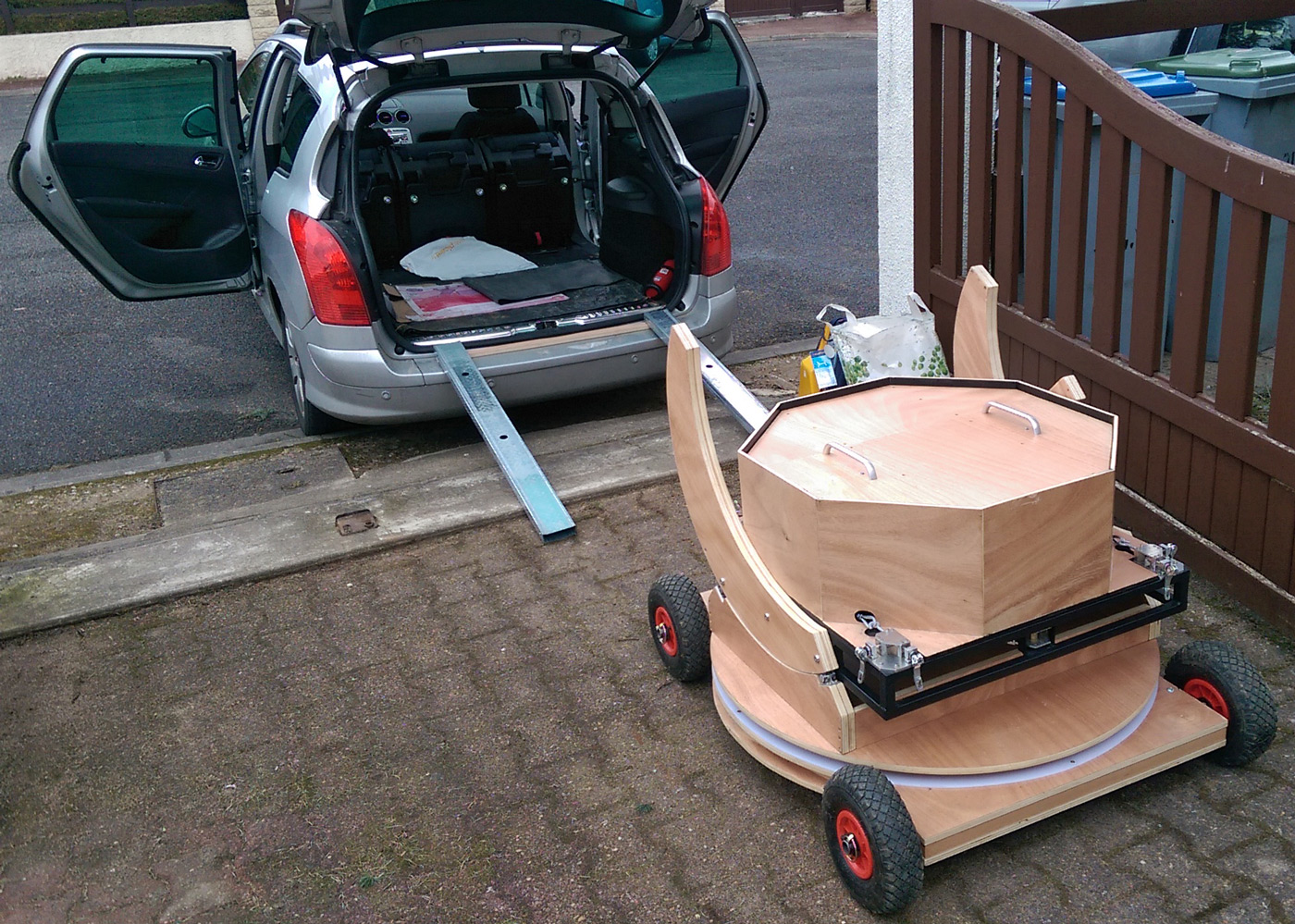
The initial requirement was that the telescope had to fit in the trunk of a mid-sized station wagon, like a Peugeot 308. Mission accomplished—and loading is quick. Two ramps were made to load the rolling base into the trunk. All you have to do is fold the rear seats forward, and there’s plenty of room to fit the rolling base, secondary ring, and all the accessories (tubes, eyepiece case, step stool, table, ramps, etc.).
Note: The ramps, which were initially far too flimsy, have been replaced by ramps designed for garden machinery—they do a much better job here 🙂.
But the real test is in the field. Arrival is no problem—just unload everything and set up calmly while the mirror cools down. But during the last packing session, I timed a total of 10 minutes between deciding to pack up and starting the engine to leave… I’m quite happy with the efficiency achieved.
transport_01
transport_02
transport_03
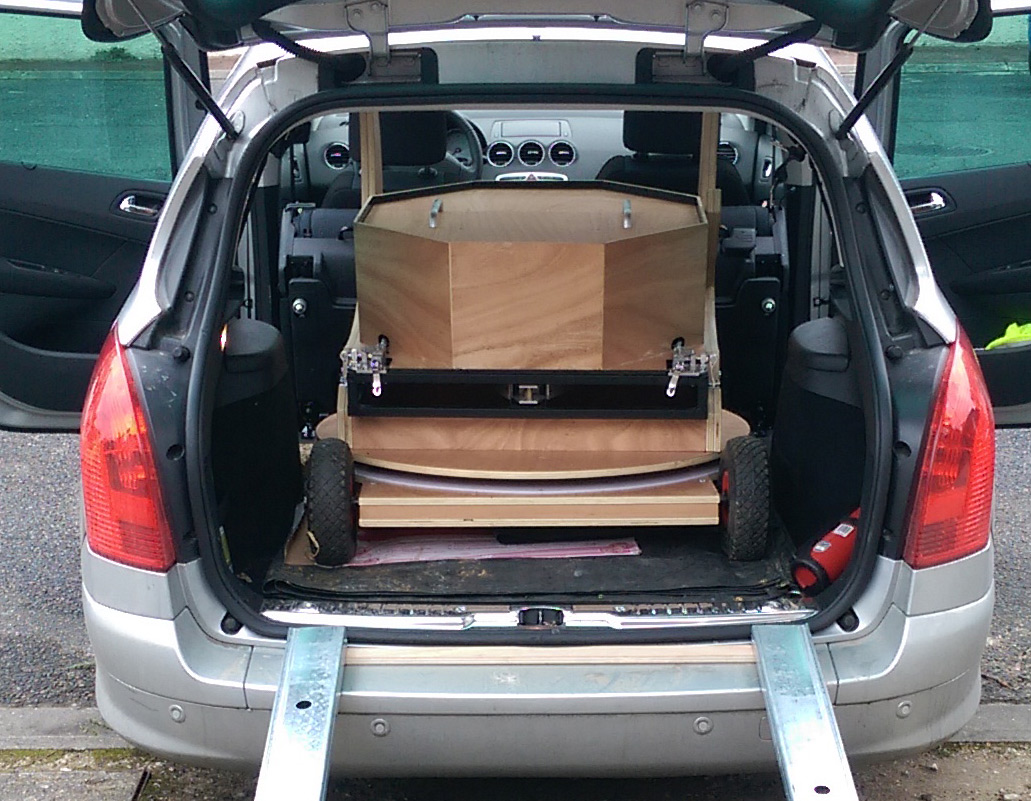
transport_04
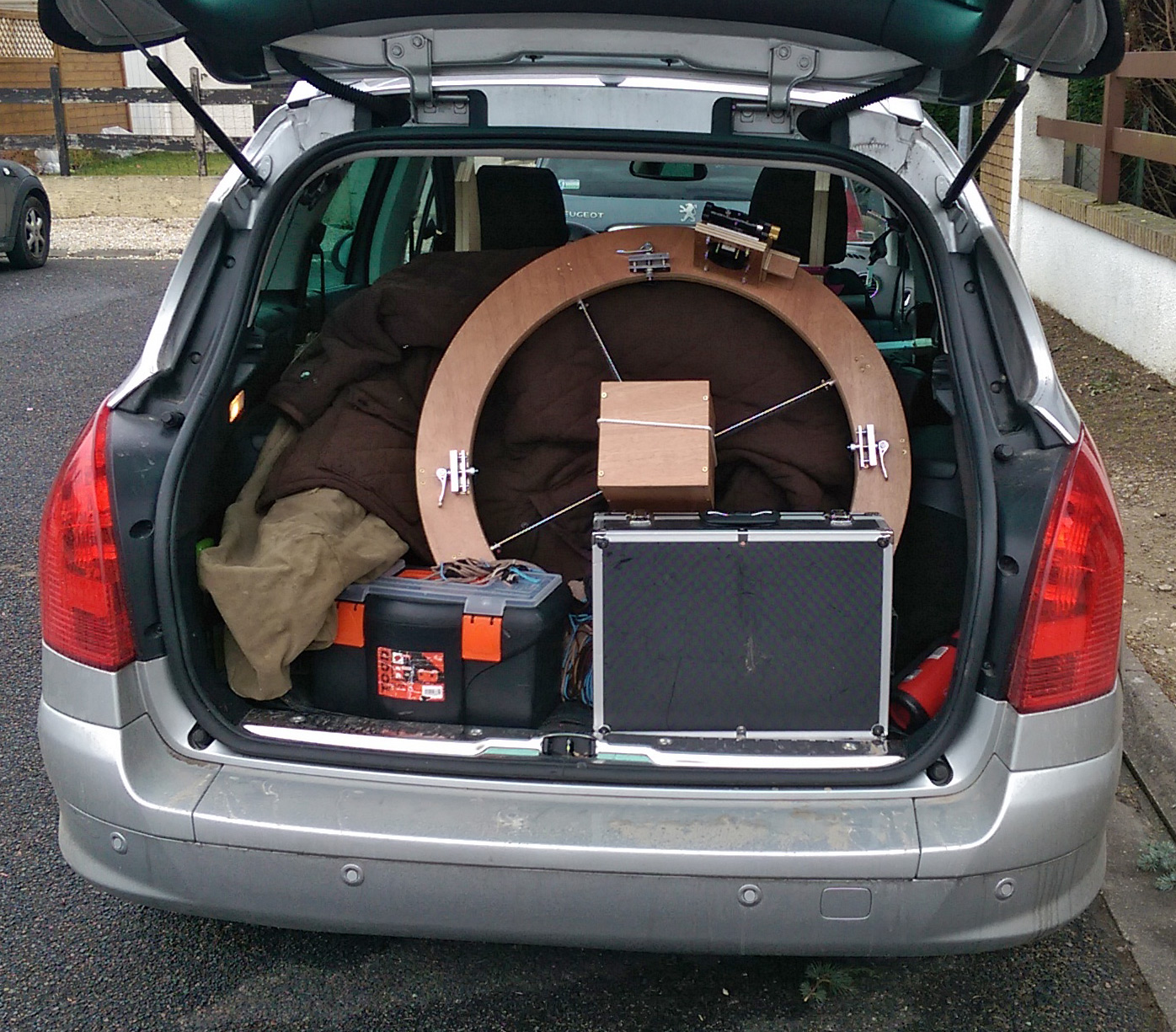
transport_05
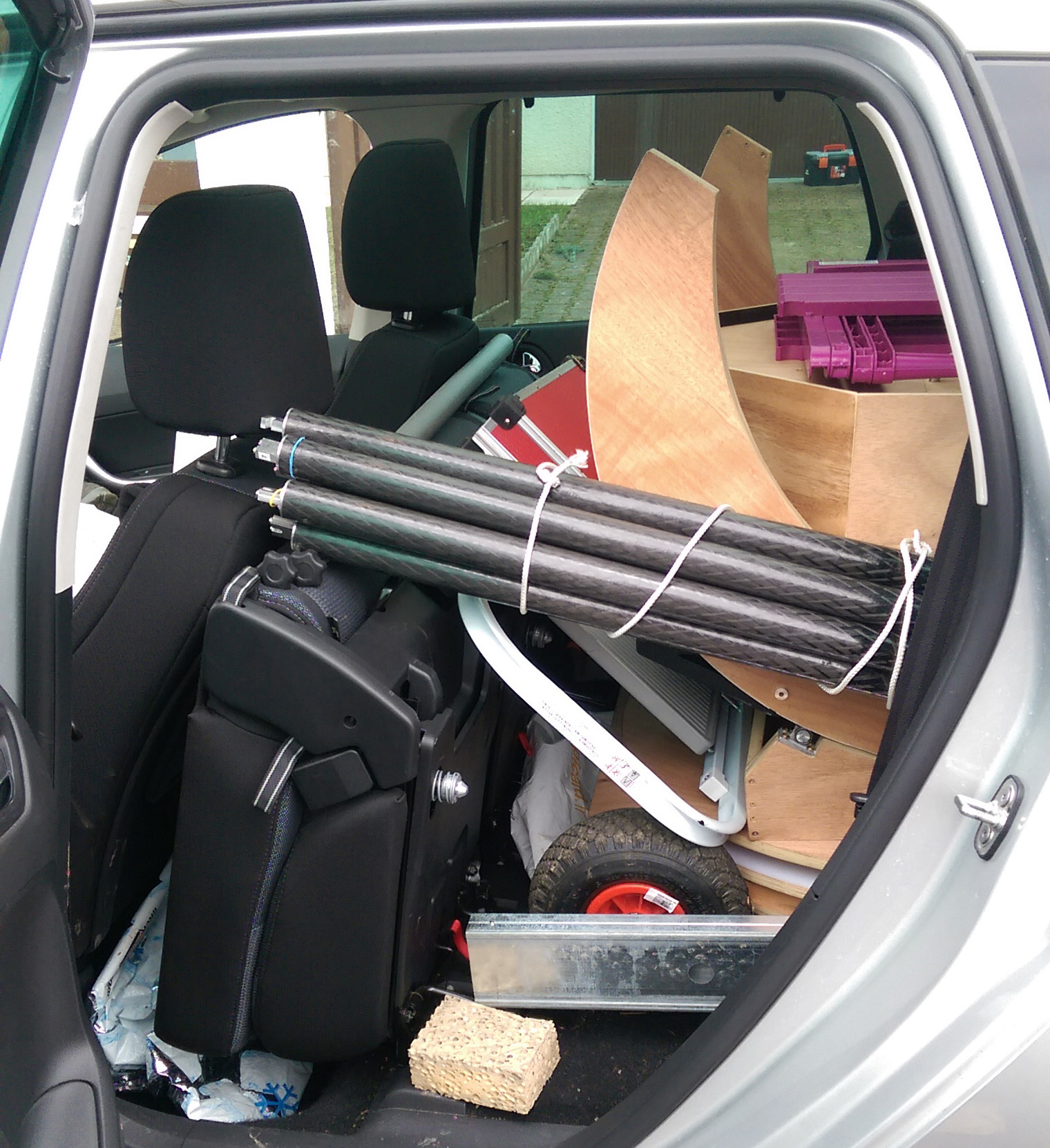
That’s it ! everything is operational. There are still a few finishing touches left, but overall, everything went as planned… now it’s time to enjoy the pleasure of observing!