Design & opticals
Avant de se lancer dans les premiers coups de scie, il convient de se poser quelques instants et de réfléchir à ce qu’on veut …
Project Definition
Unlike my previous project, the specifications are relatively simple: I want an instrument with the best possible performance to fully enjoy deep-sky visual observation. Other constraints exist but are secondary.
This means building the largest possible instrument, within reasonable limits for an individual:
- Instrument size: It must fit in the car trunk, which is 1 meter wide. Given the current market offerings from artisans and manufacturers, this leads me to choose a 600mm mirror diameter.
- Optical quality: I’m going directly for high-quality optics from Mirro-Sphère (this is simply the largest diameter Franck Grière can currently manufacture as of 2012).
- Weight: There’s no real weight constraint—the mirror will weigh around 40 kg and will already be barely “portable.” I’m estimating a total weight of 80 to 90 kg.
- Transport: The telescope will be mobile on wheels, making it easy to load and unload from the car (a station wagon).
- Design: It will be a Dobsonian (Alt-Az) for ease of use.
- Motorization: None for now, but the rocker will be designed to allow for future motorization and encoders.
Optical Design
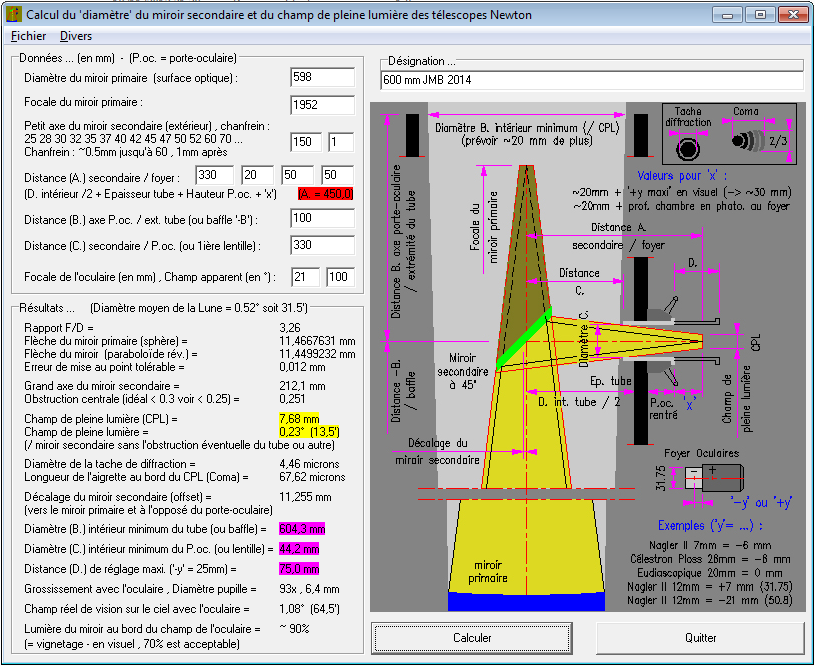
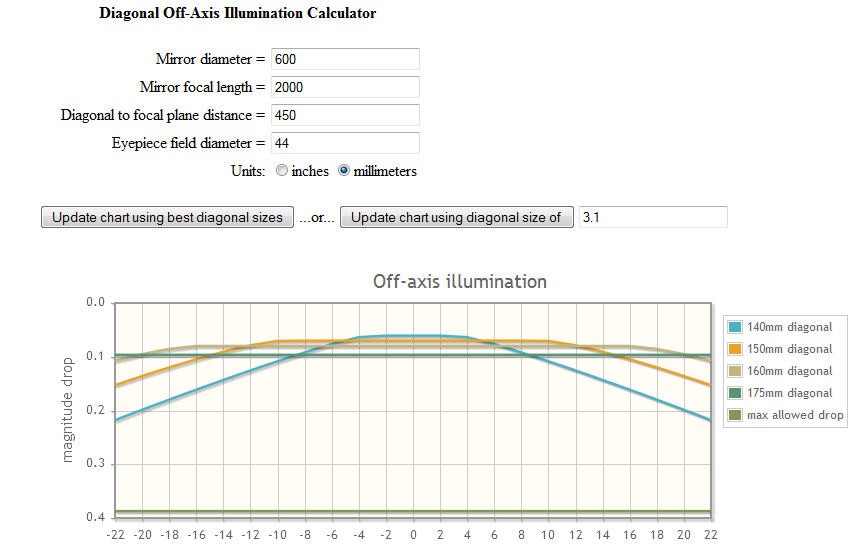
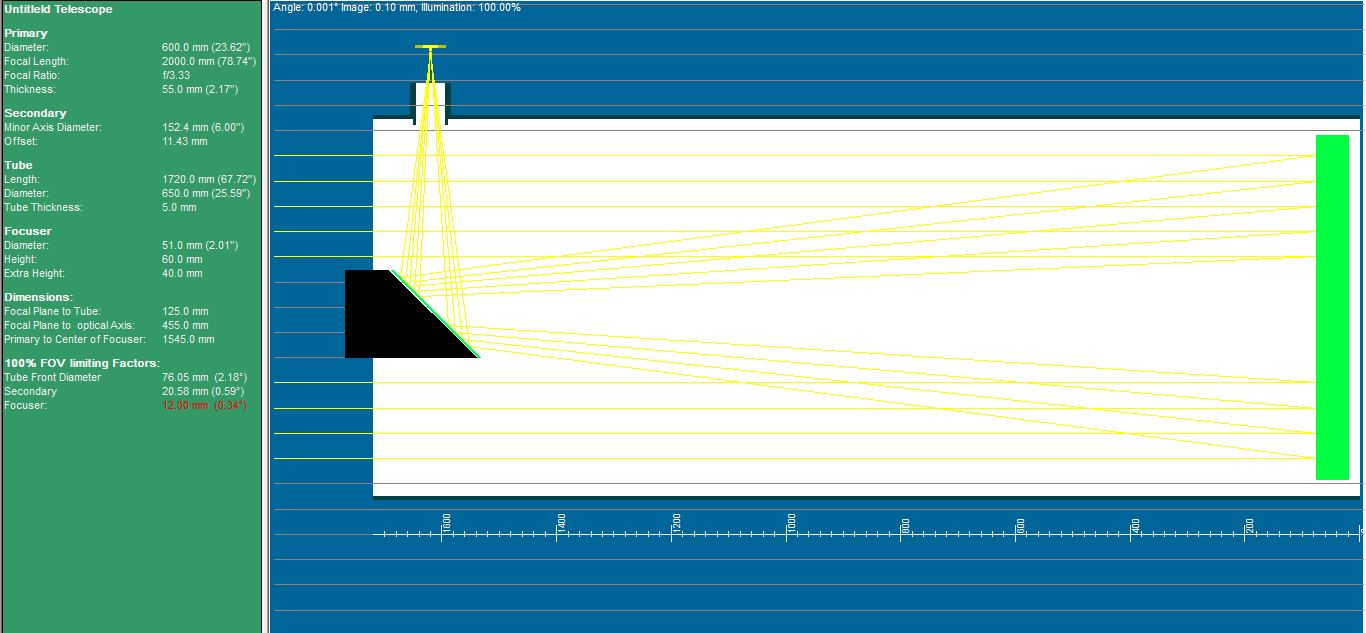
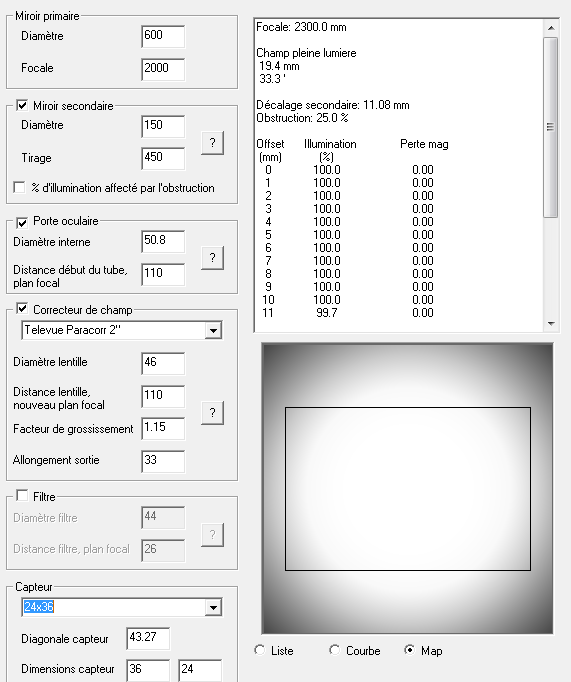
The primary mirror is 600mm with an F/D ratio of 3.3, giving a focal length of 2000mm. Some optical layout calculations give me a secondary-to-focus distance of 460mm, which helps determine the overall dimensions of the assembly, as well as the size of the secondary mirror. The choice here is also relatively simple: I’ve selected the largest available diameter, 150mm, while ensuring the fully illuminated field is sufficient and the obstruction is not prohibitive. The latter is 25% linearly, which remains reasonable, especially for this class of instrument. The secondary mirror’s offset will be 11mm to capture the entire incoming light cone.
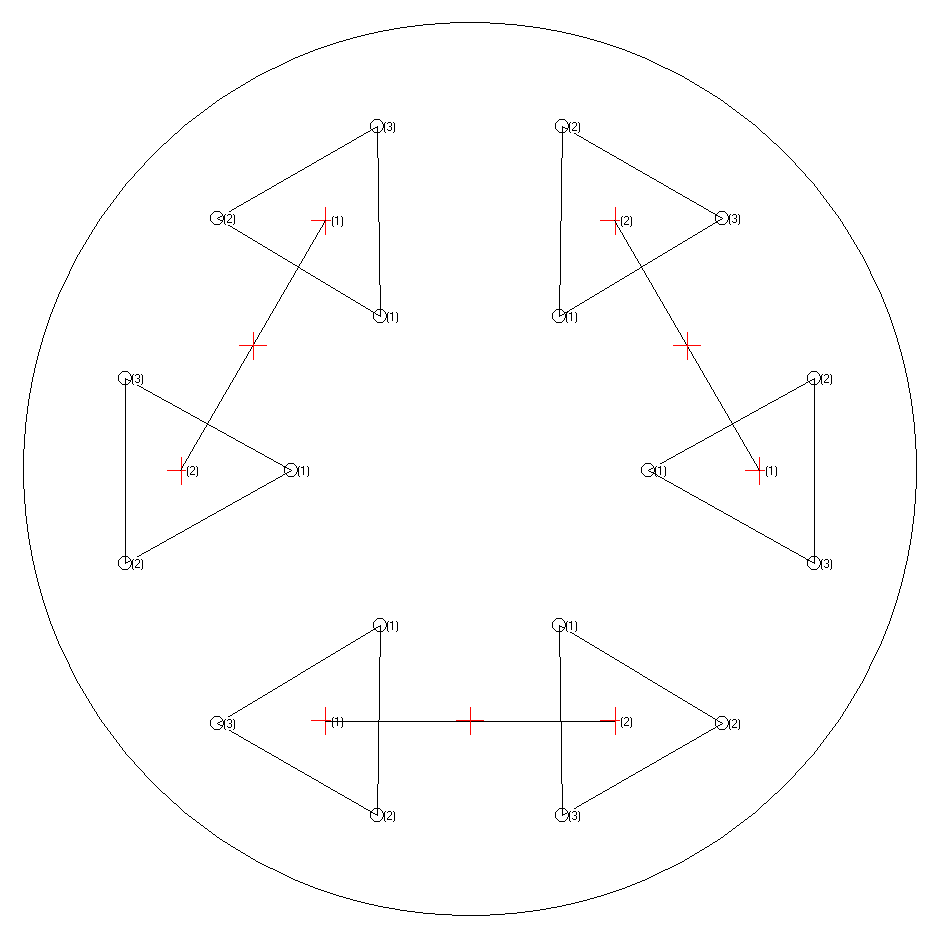
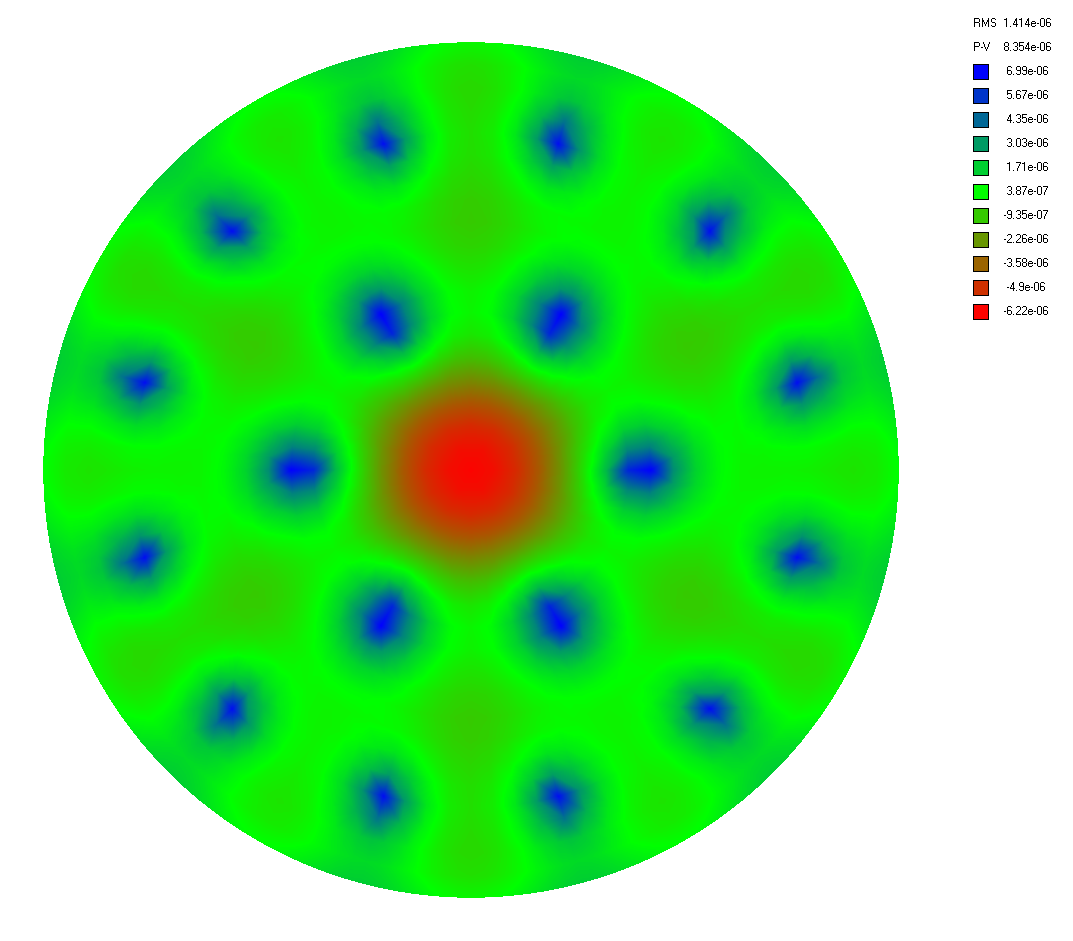
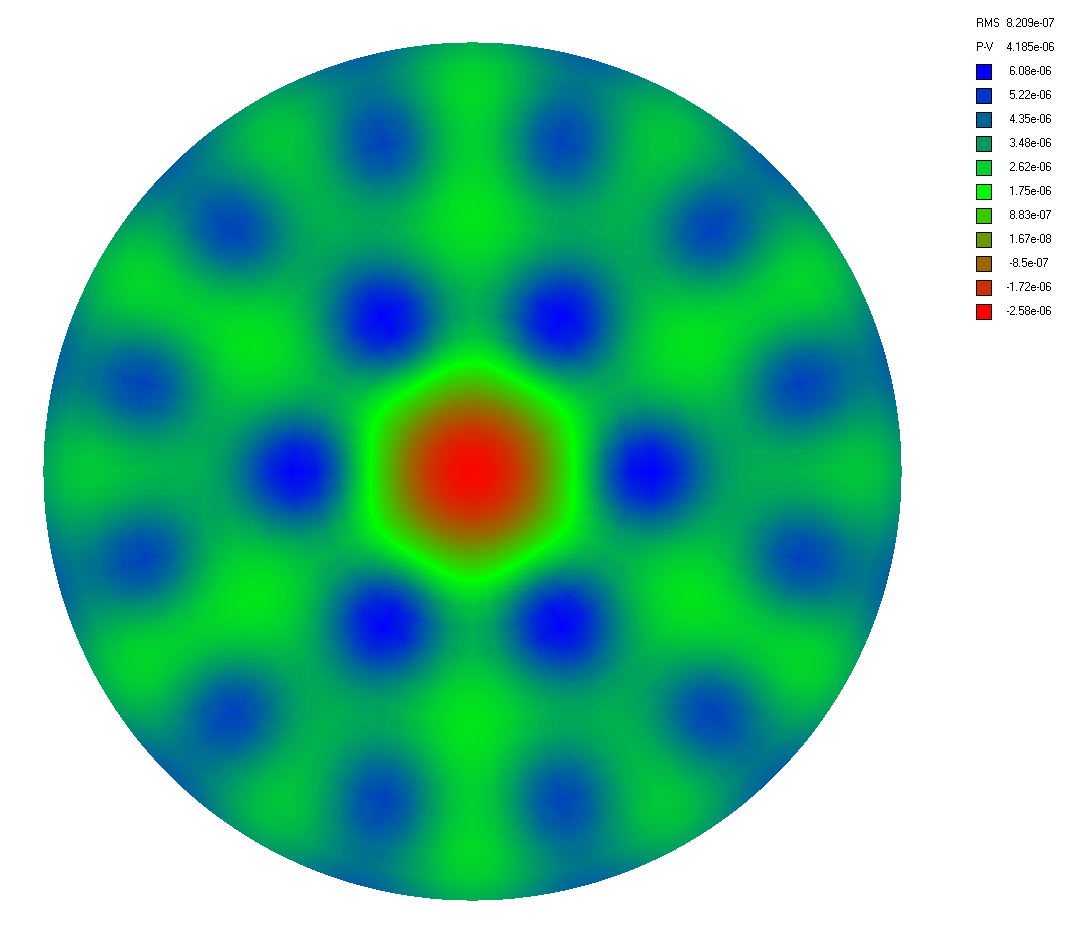
The support points for the primary mirror are also calculated using the well-known PLOP software, which helps determine their optimal placement.
Now we can move on to designing the entire assembly…

600_raytrace_cpl_2014
600_raytrace_diagonal
600_raytrace_mynewton
600_raytrace_vignettage
600_plop_cell_parts
600_plop_color
600_plop_z88
Structure
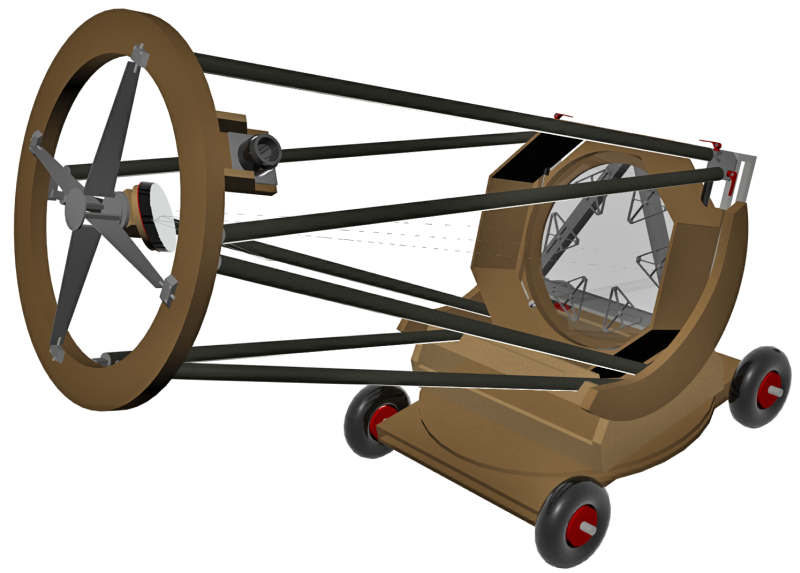
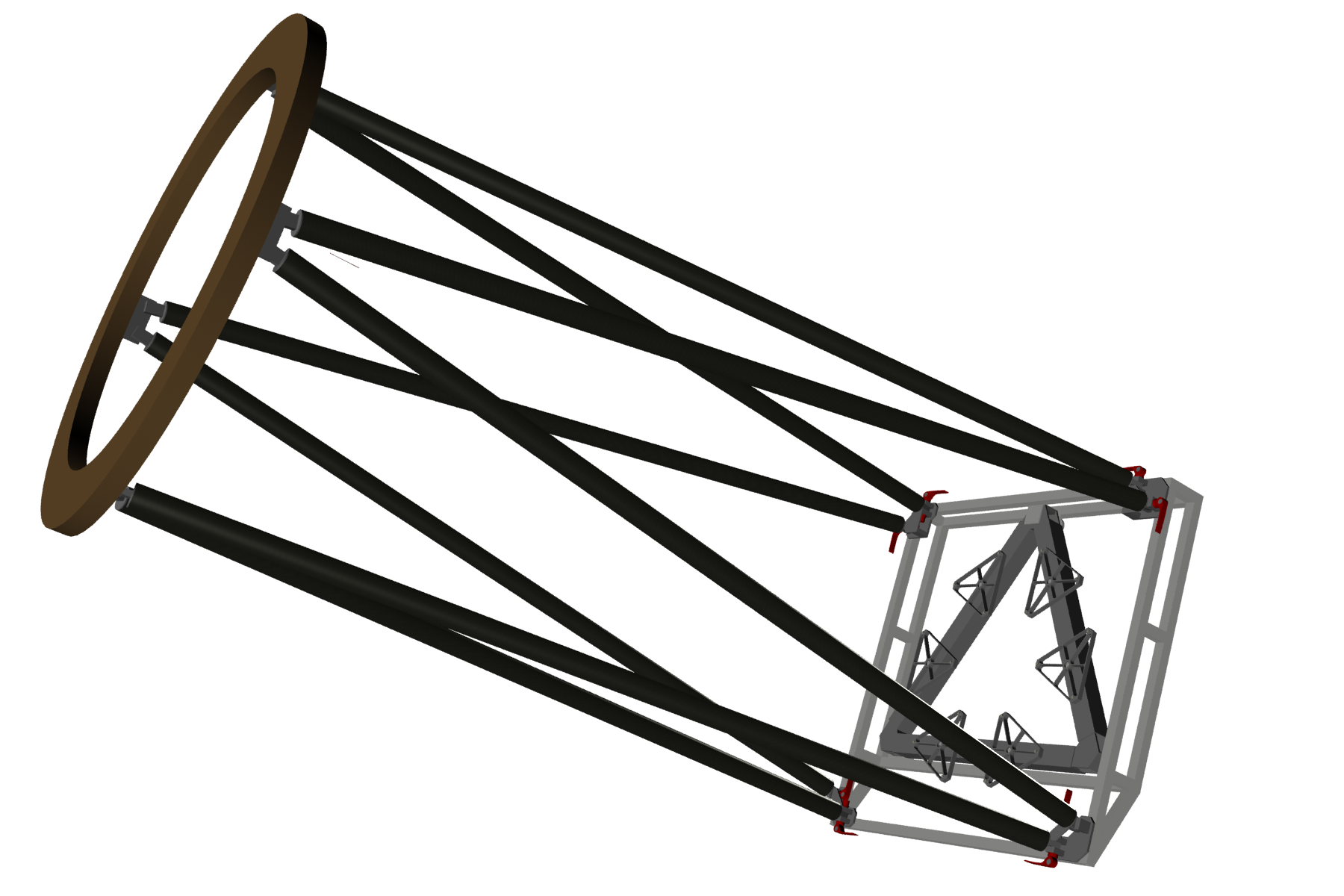
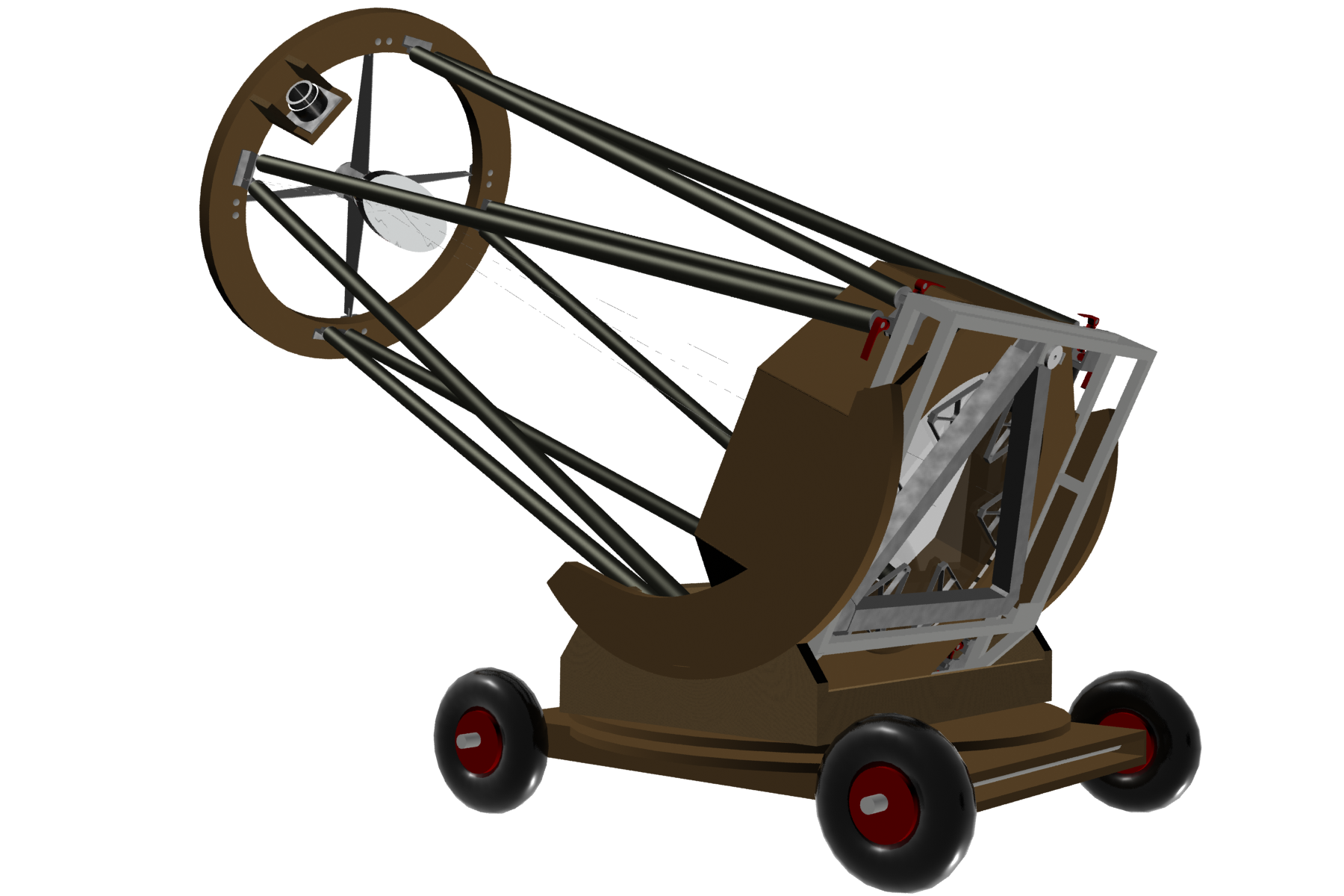
I’m going back to a symmetrical 8-tube truss structure, which provides lightness and rigidity while remaining very simple to design and build. My experience with the 400mm “light flexrocker” and then the 500mm from my astronomy club—a much more conventional Dobsonian—definitively cured me of “soap box” telescopes that weigh a ton and are impossible to transport. However, there are non-adjustable variables here, such as the mirror’s weight.
This doesn’t prevent building lightweight, but I didn’t want to sacrifice rigidity. So, I opted for a “primary cage” made of a welded steel frame, which remains reasonably sized (720mm per side) and is very rigid (even at my 110 kg, I couldn’t deform it noticeably). The lower mounts are directly attached to this frame, as is the mirror cell, so no wooden parts are part of the optical tube’s “vital” structure, at least for the lower section.
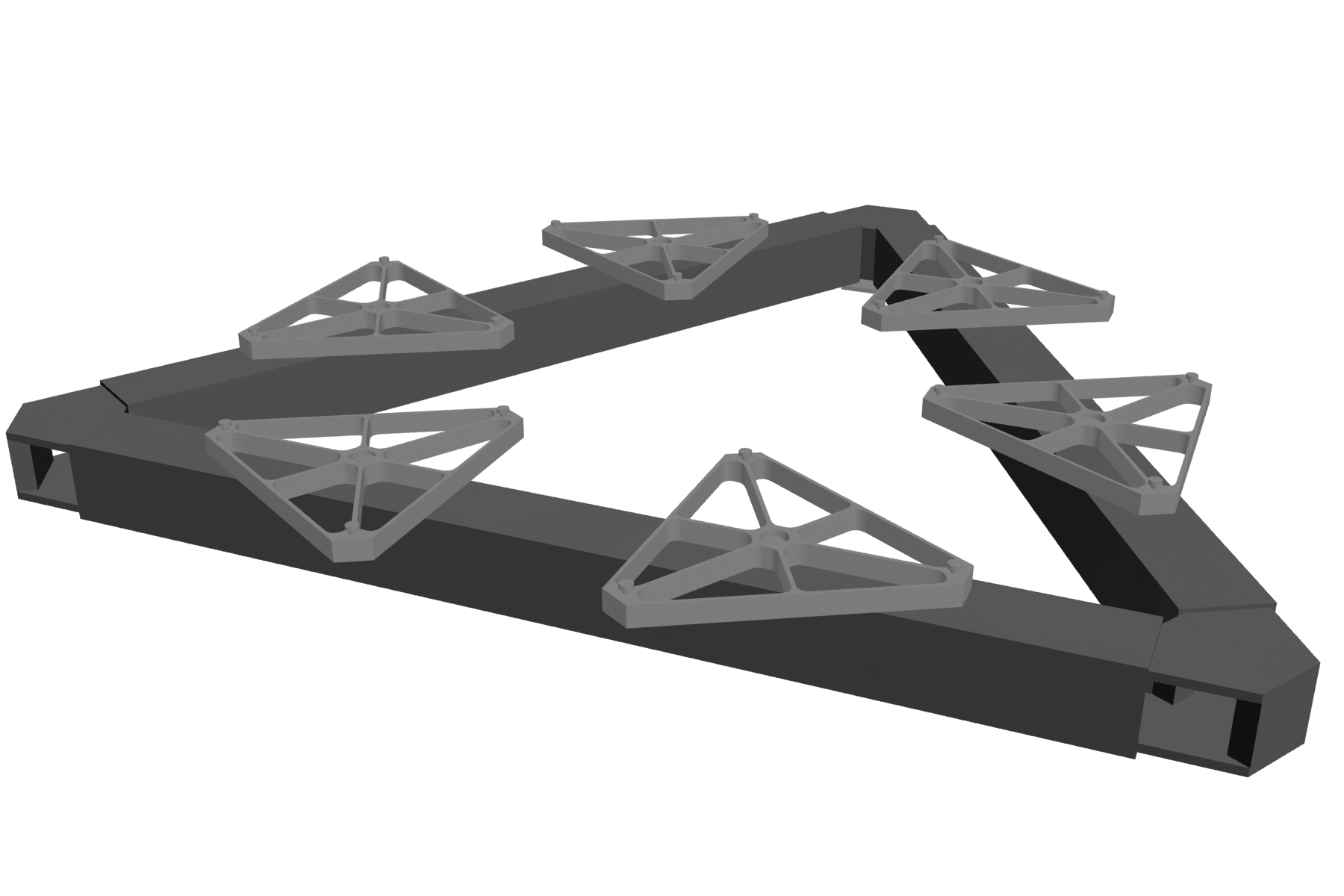
The mirror cell itself is entirely made of aluminum and has several features:
– Symmetrical construction to avoid any differential flexure between points (I see many mirror cells with two horizontal crossbars, one of which supports 2/3 of the mirror. Conceptually, this doesn’t seem optimal).
– 100% ball bearing and spherical joint pivot points to avoid any questions about friction and tension in the primary mirror support.
– For lateral support, after much thought, I went with a 4mm steel cable. I’ll see during use if this is optimal or if I need to return to 45° supports.
The secondary cage is much more conventional and uses more wood, which is still easier to work with for a part of this size. I admit I freely borrowed many good ideas from Pierre Desvaux’s designs, except for the spider, which is a four-straight-arm version (non-offset). The secondary mirror will be isolated with a thick plastic plate (polystyrene) to prevent dew. We’ll see if this is effective.
The result is as follows:
600_structure_result
600_structure_01
600_structure_02
600_structure_04
600_structure_wireframe
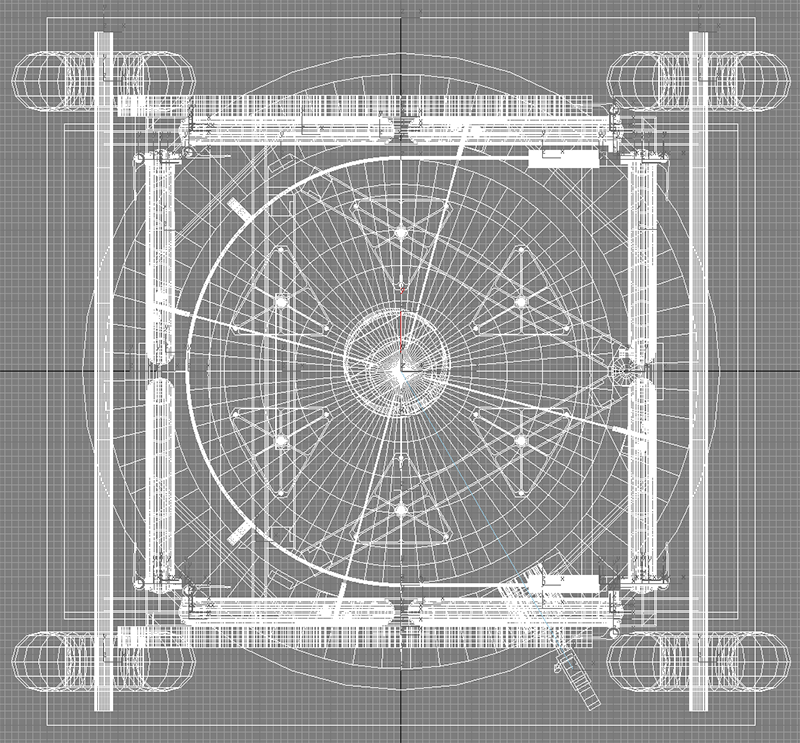
Once the telescope is virtually finalized, it’s time to start manufacturing…
Next: Primary Cage Fabrication