Primary cage
The primary mirror support is the “heart” of the system. It supports the 40 to 50 kg of the primary mirror without deforming it, while allowing it to tilt from 0° to nearly 90°, and must be light enough to avoid turning our telescope into an improved anti-aircraft battery…
Three essential components are built:
- The mirror cell that supports the mirror
- The collimation system
- The attachment system for the tubes connecting the primary and secondary cages
These components are assembled into a “cage” that is integral with the rocker. In this case, as with many recent Dobsonians of this size, the cage is essentially a framework that ensures rigidity and lightness. The mirror cell, rocker sides, and truss tubes of the telescope are attached to this framework.
Mirror Cell
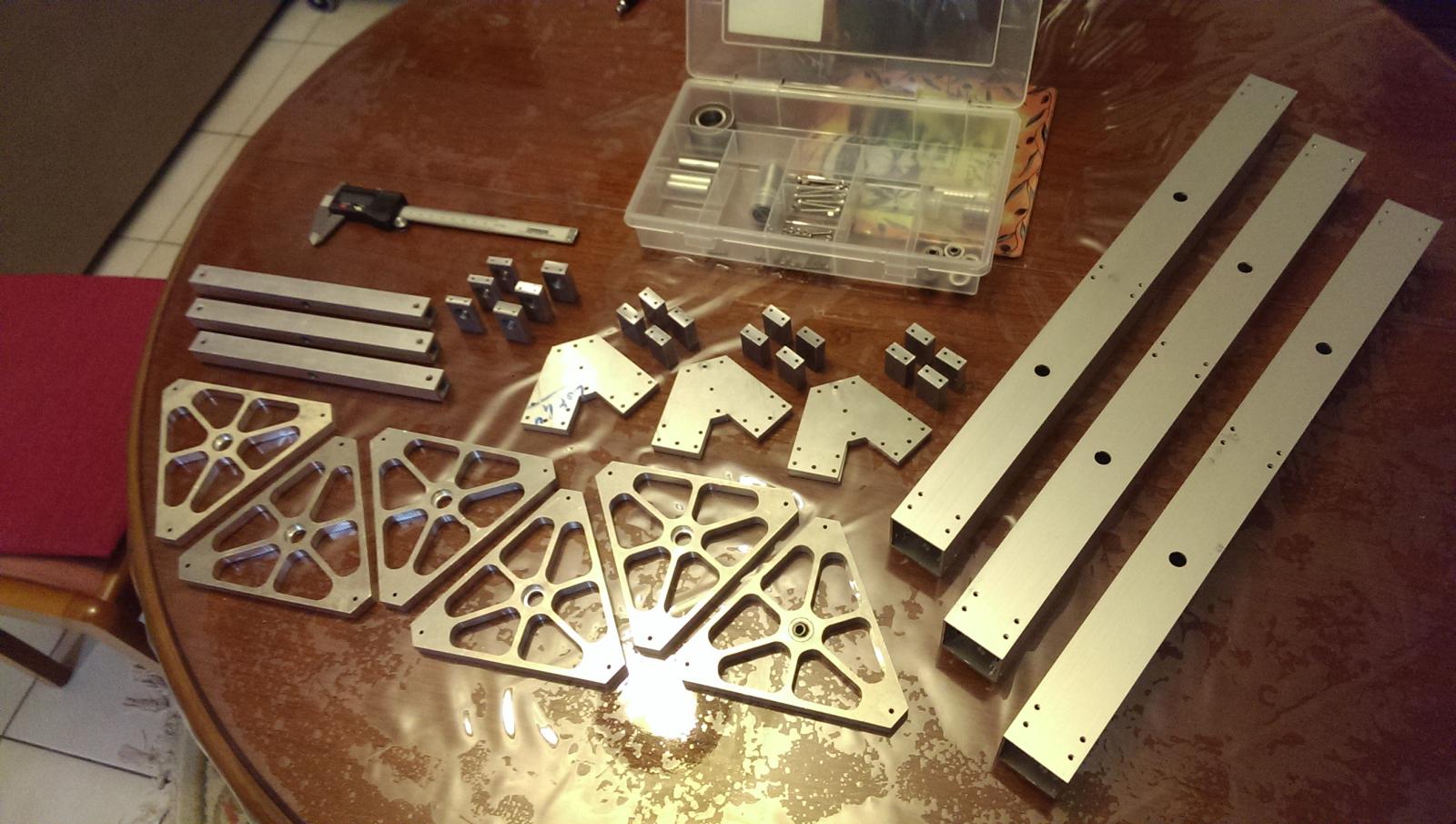
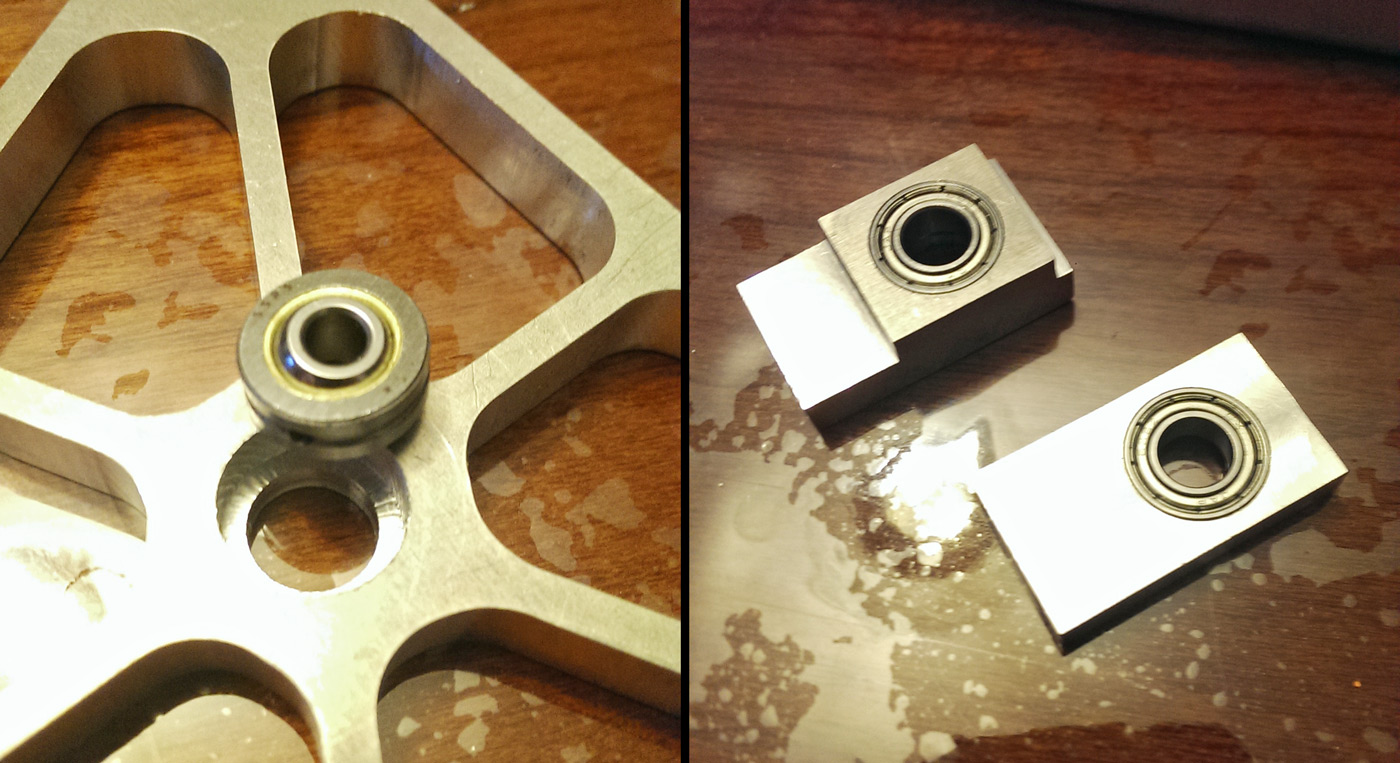
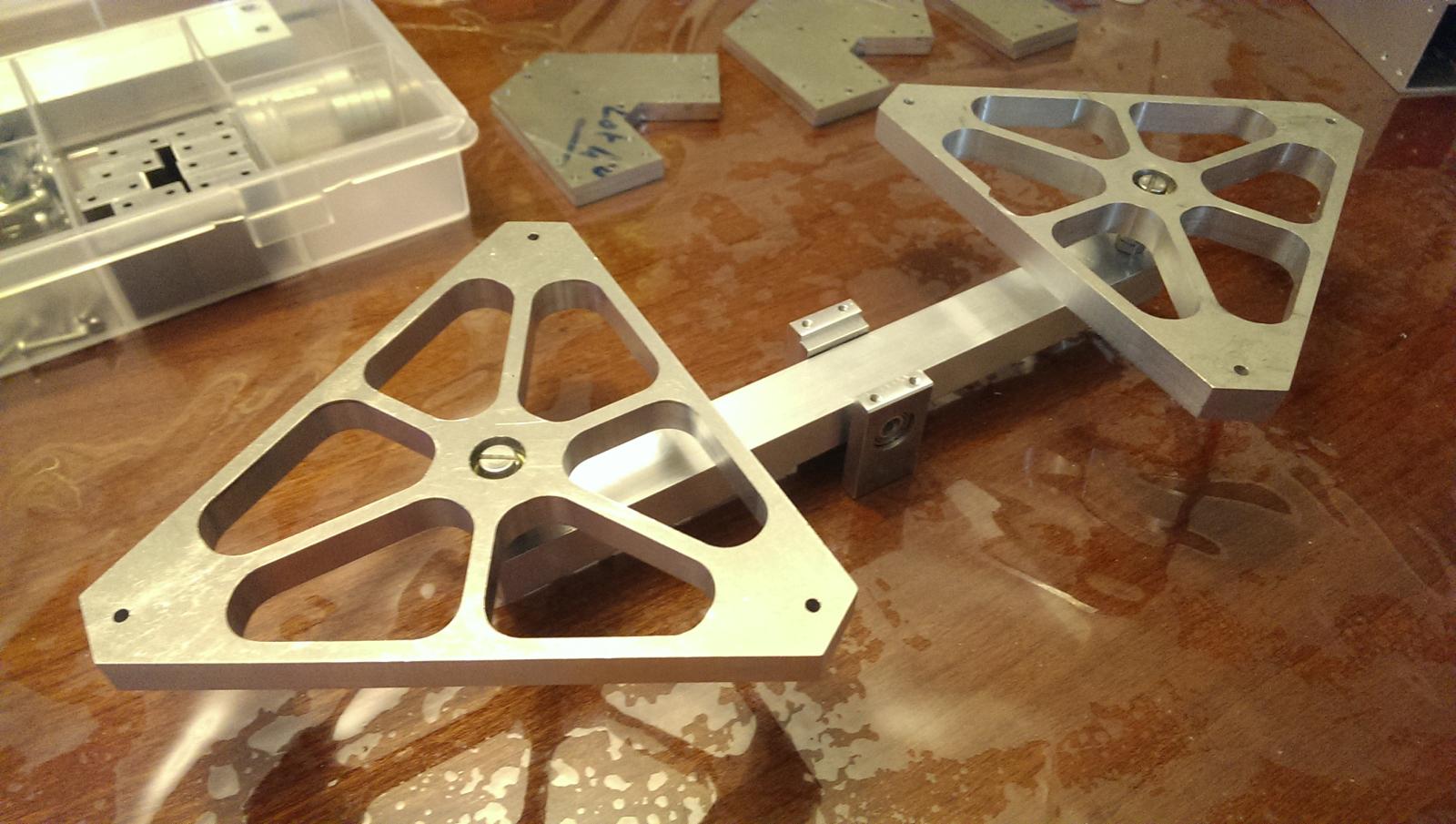
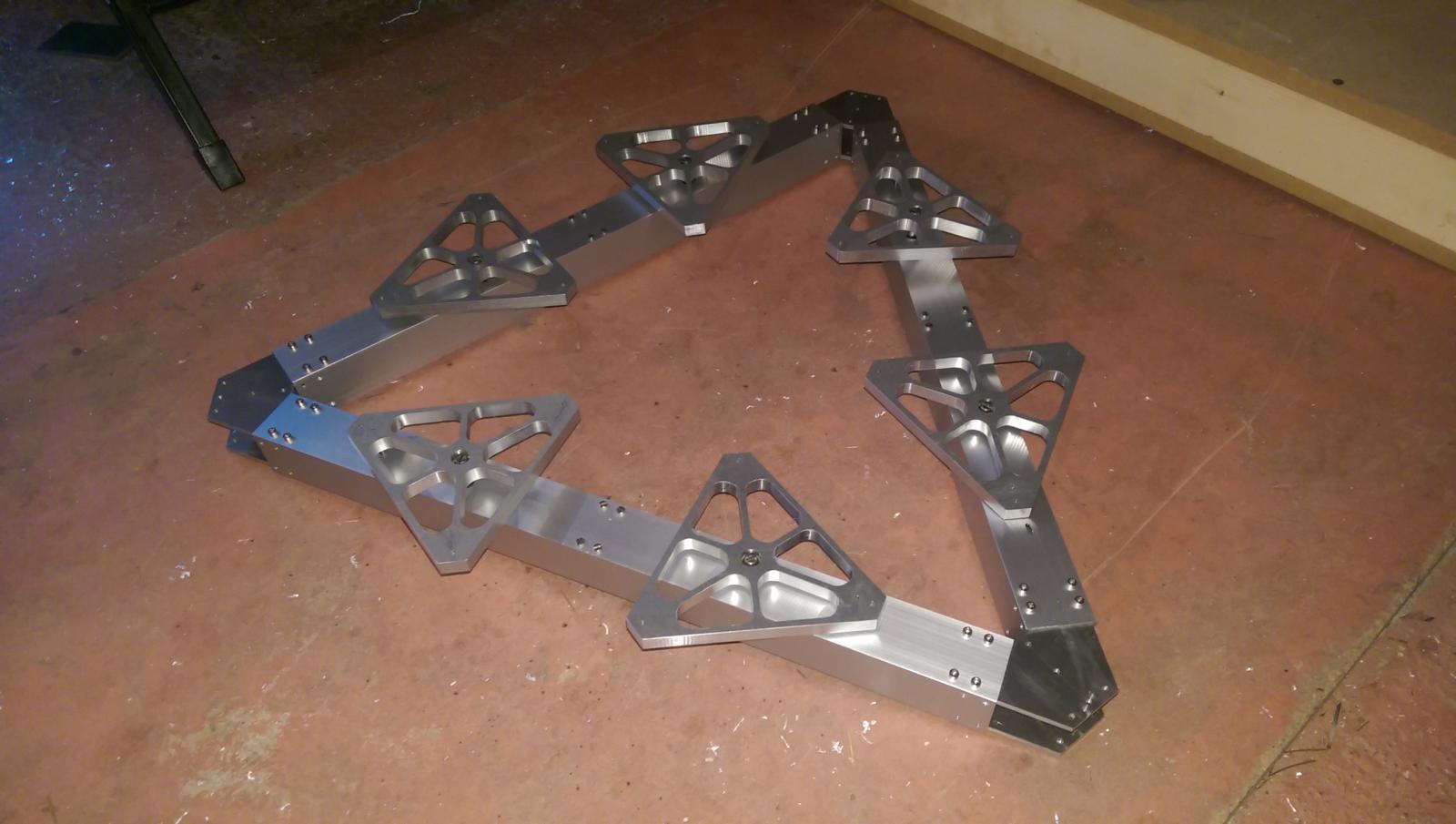
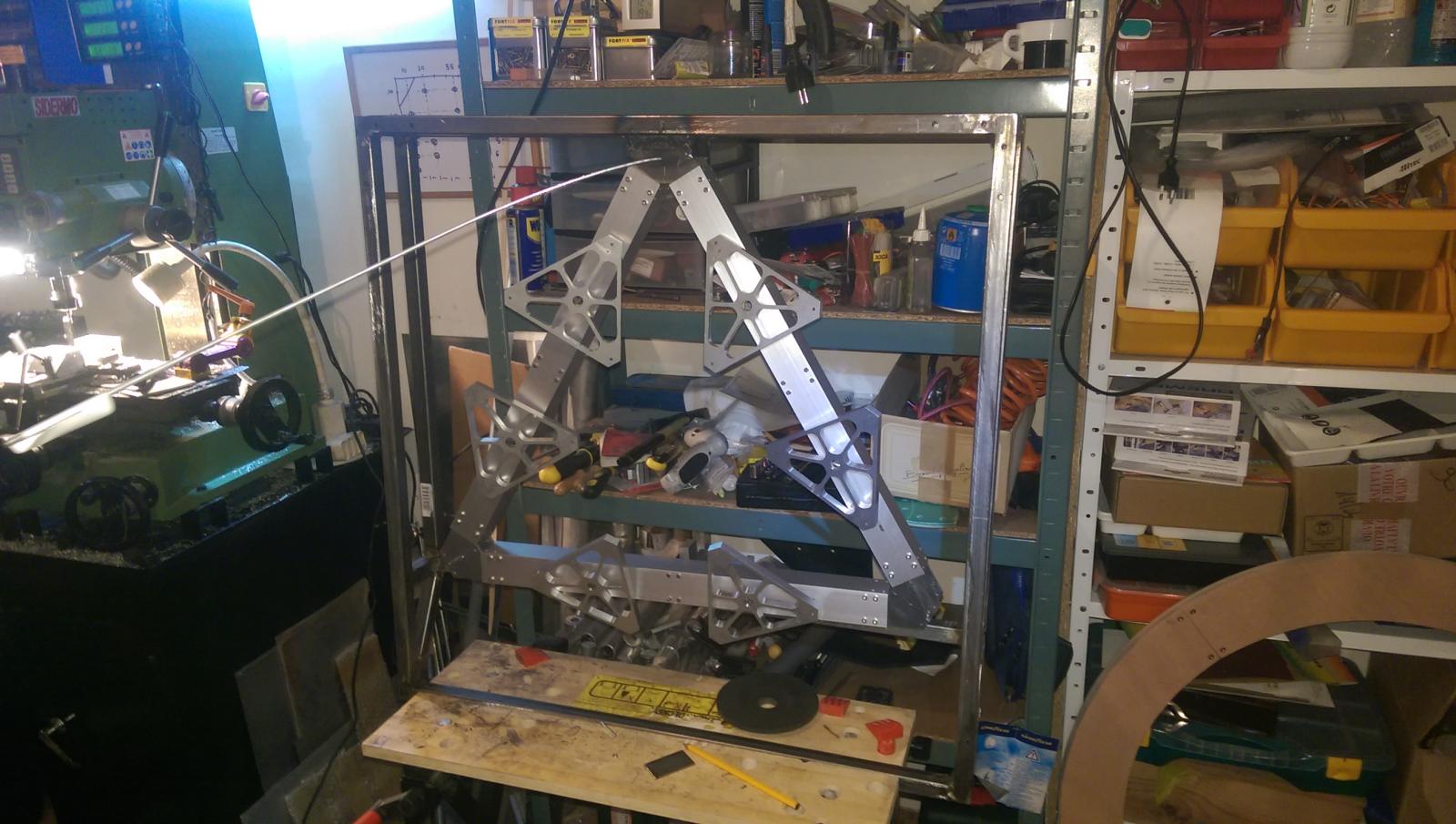
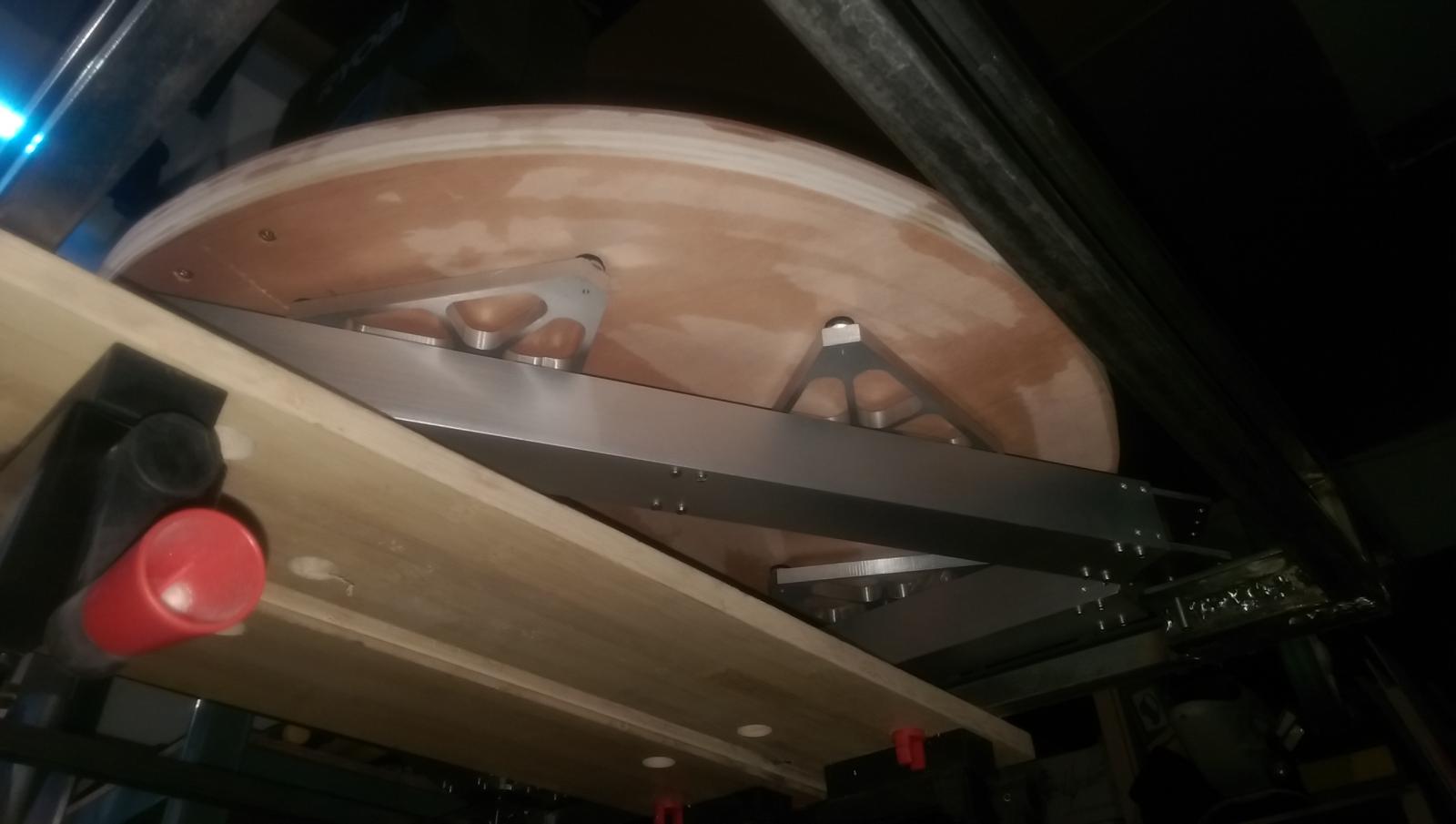
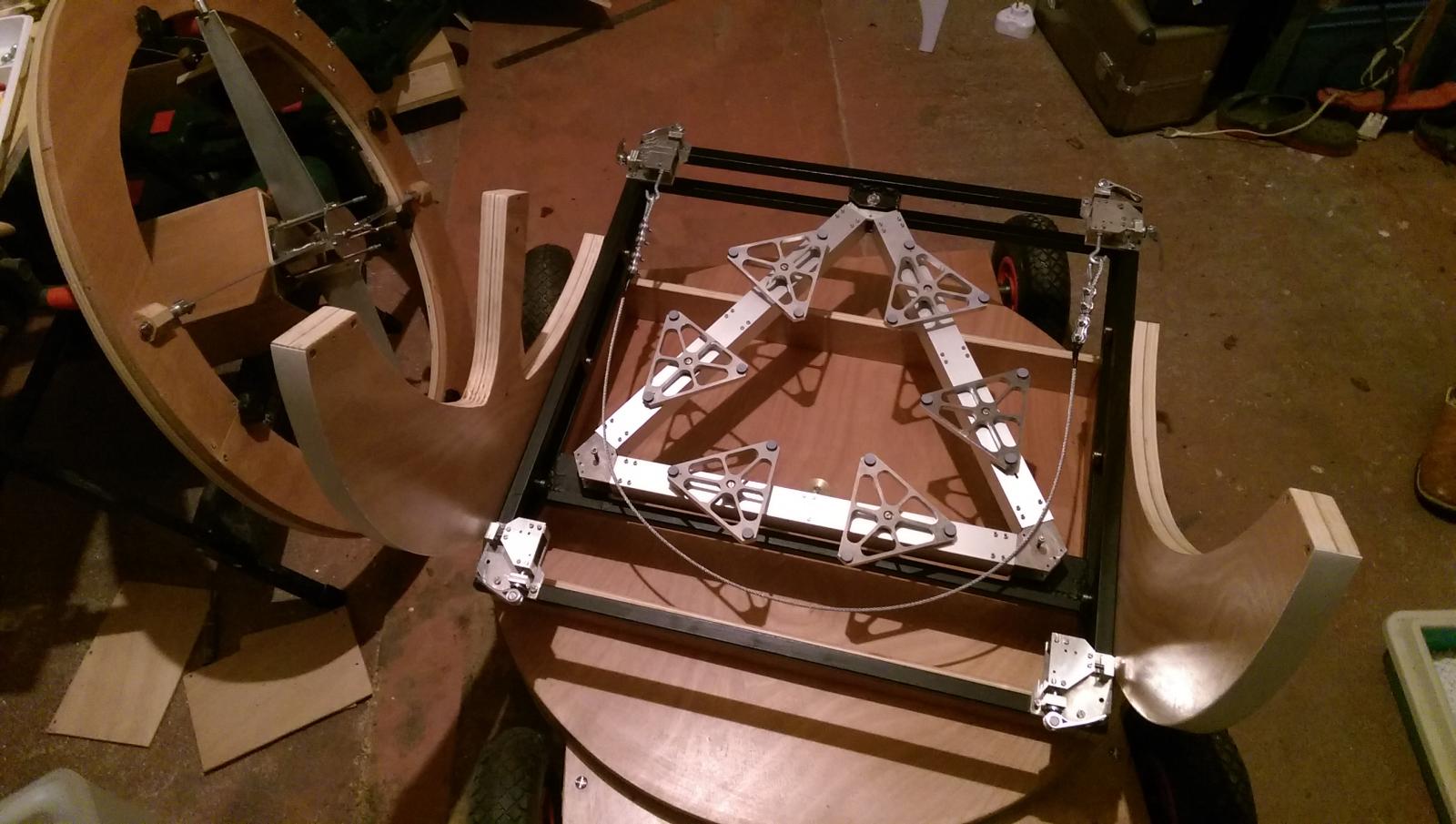
The mirror cell is the soul of the system. It’s a classic 18-point system, with 6 triangles on rocker arms. The triangles are made of 10mm-thick 2017 aluminum, extensively hollowed out to combine rigidity and lightness. They are articulated on stainless steel transmission ball joints and assembled in pairs on an aluminum corner rocker arm. Each rocker arm is also mounted on two ball bearing housings, then inserted into three 40x40x2mm aluminum beams that make up the mirror cell.
At each end of the mirror cell’s “triangles,” a 5mm-threaded brass bearing is placed, into which steel screws will be inserted to form the collimation system. This makes it easy to adjust the tilt from the front using flexible rods, which are within the observer’s reach when they are at the eyepiece. This allows for collimation on a star when observing alone. Finally, the primary support triangles are equipped with an anti-rotation steel rod to ensure their correct positioning once the mirror is in place.

barillet_01
barillet_01b
barillet_02
barillet_03
barillet_04
barillet_05
Framework
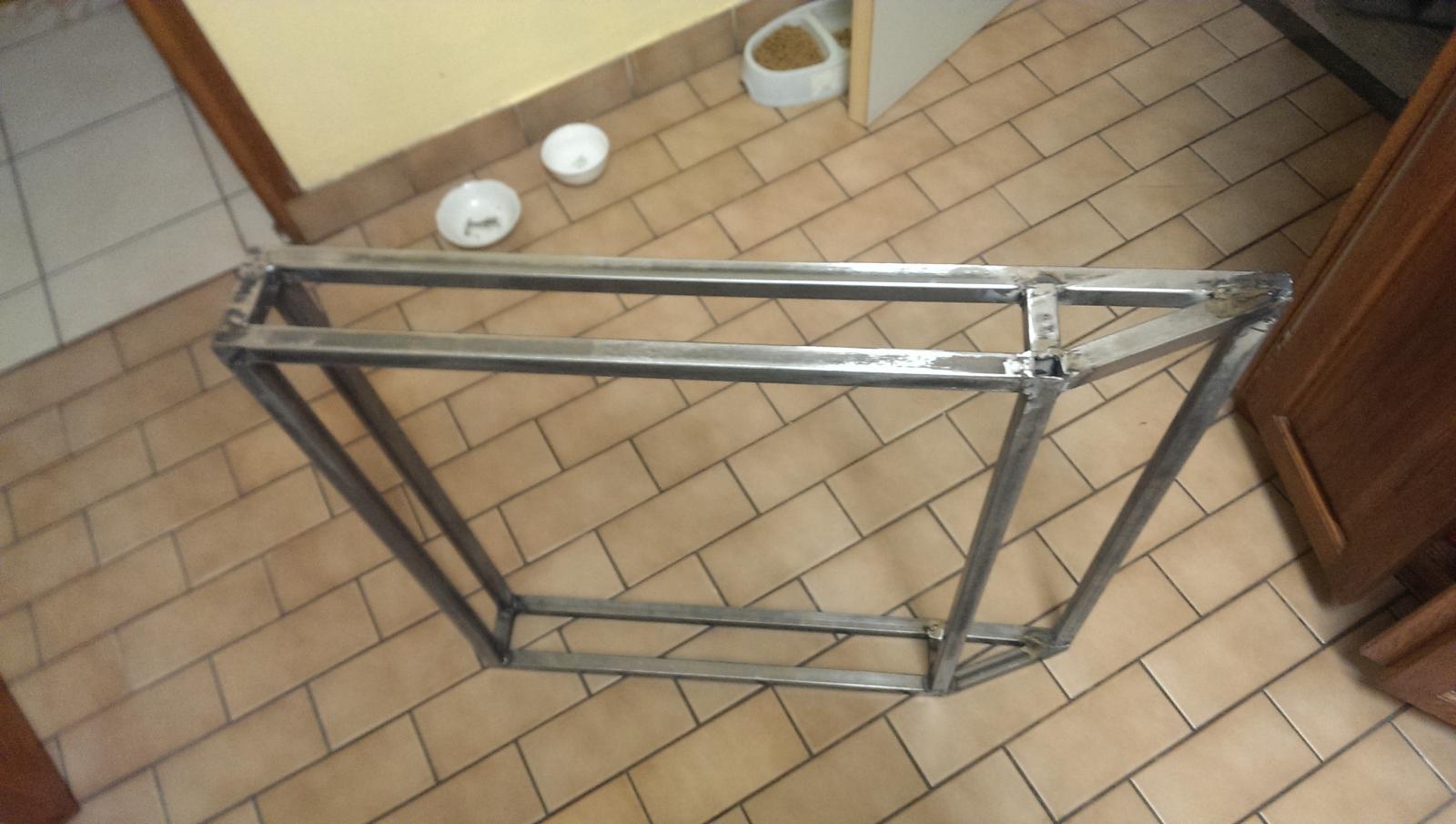
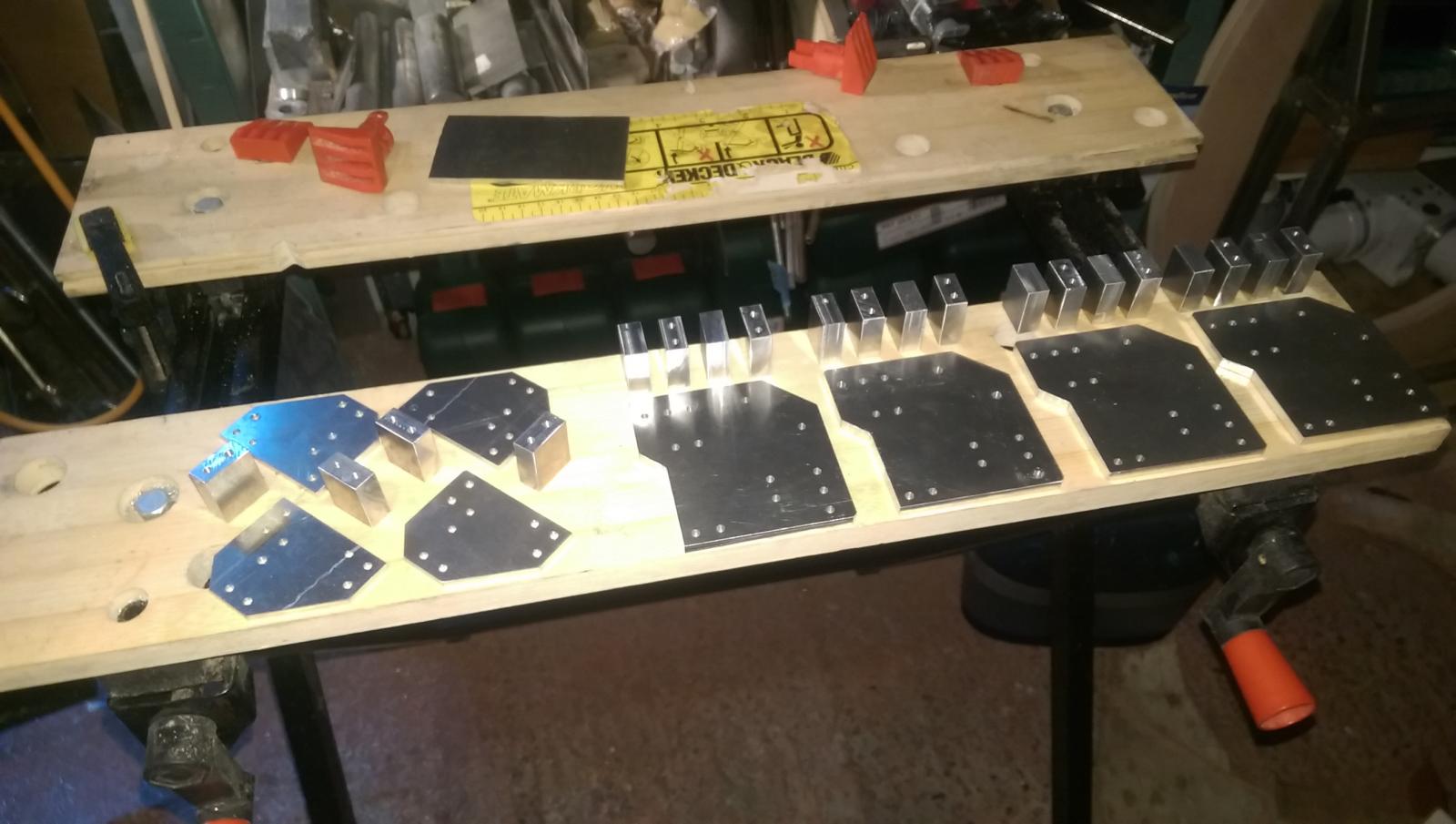
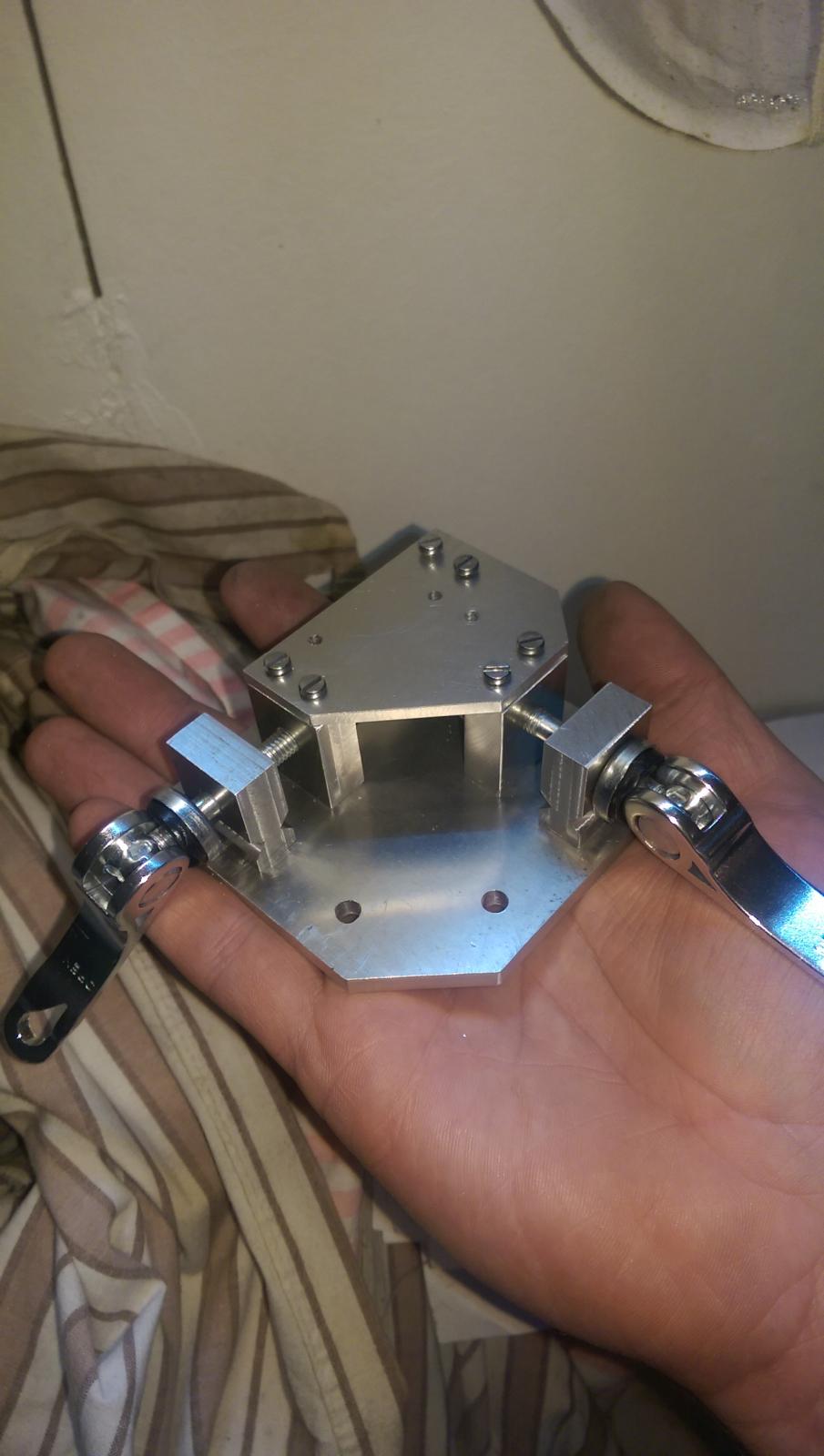
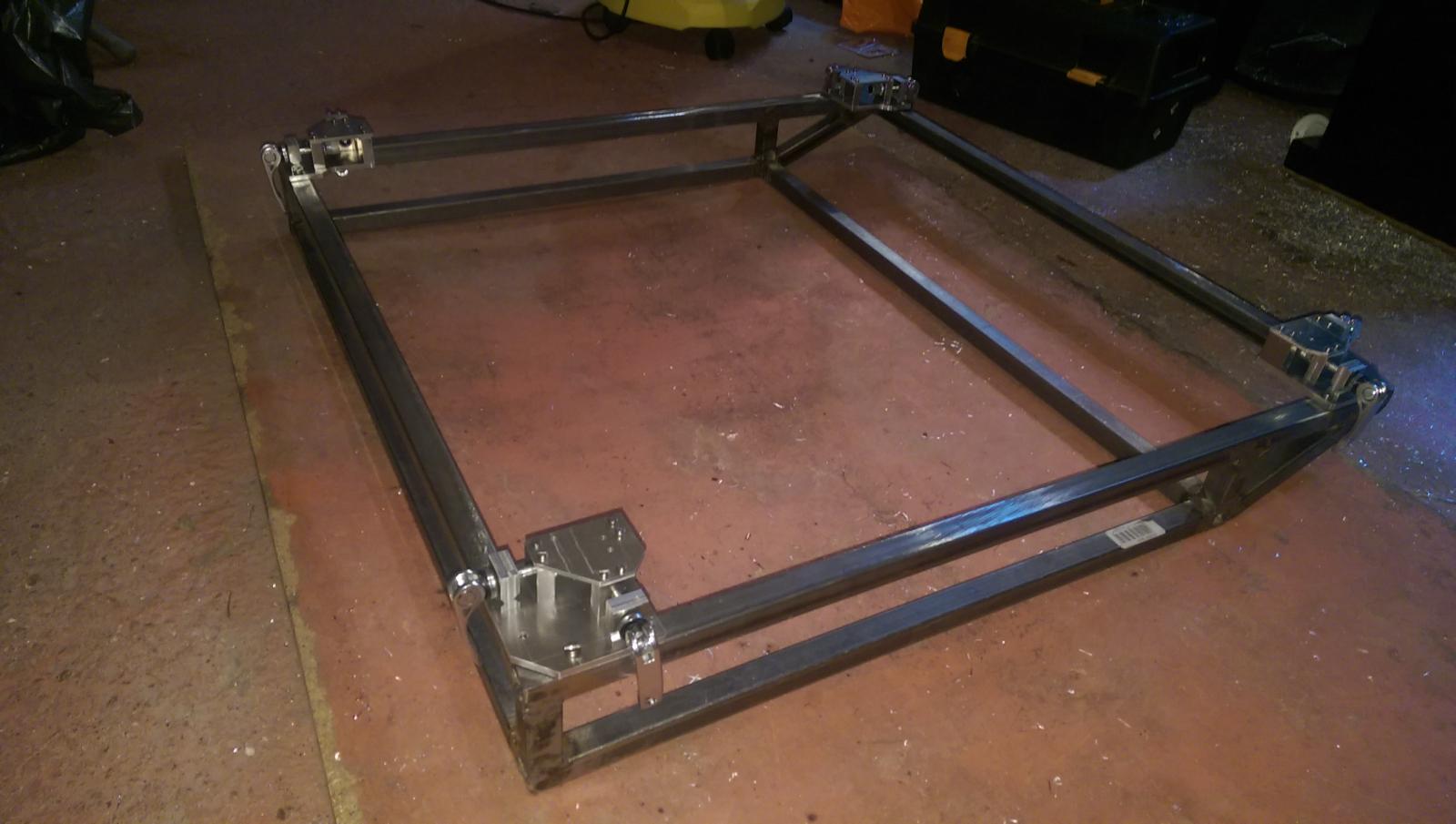
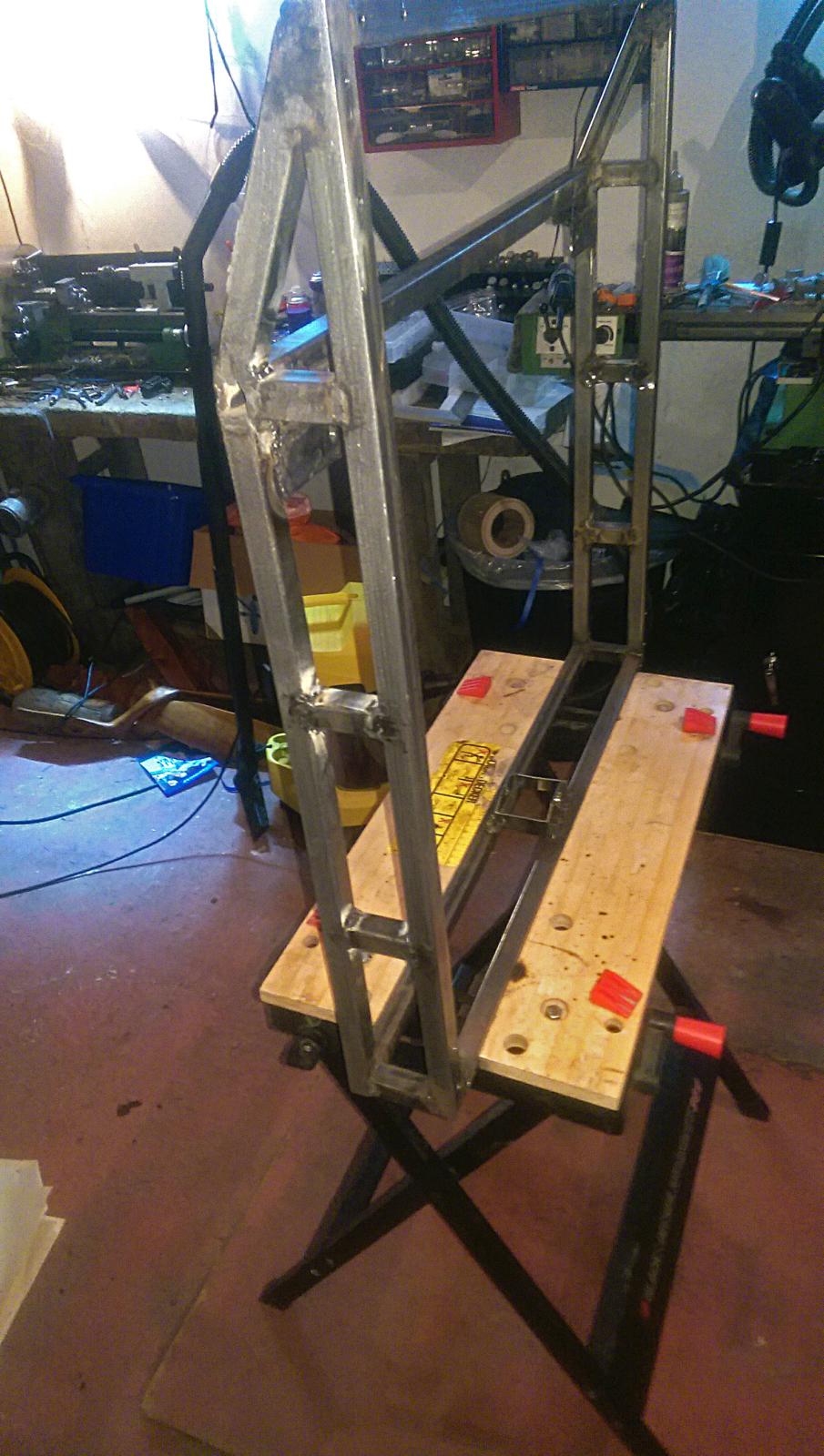
The framework is made of 20x20mm square steel tubes, 1.5mm thick. The various elements are arc-welded to create a single, very rigid piece. It essentially consists of two steel frames connected to each other to form a cradle 90mm high, which will contain the mirror cell. On the upper frame, the lower tube attachments, made of aluminum, are screwed in. The principle is simple: each carbon tube is fitted with a 10mm-thick aluminum “U”-shaped attachment that will fit onto the clamping axis and be pressed between two 10mm aluminum blocks. The whole assembly is secured with bicycle quick-release skewers, allowing for easy and fast assembly.
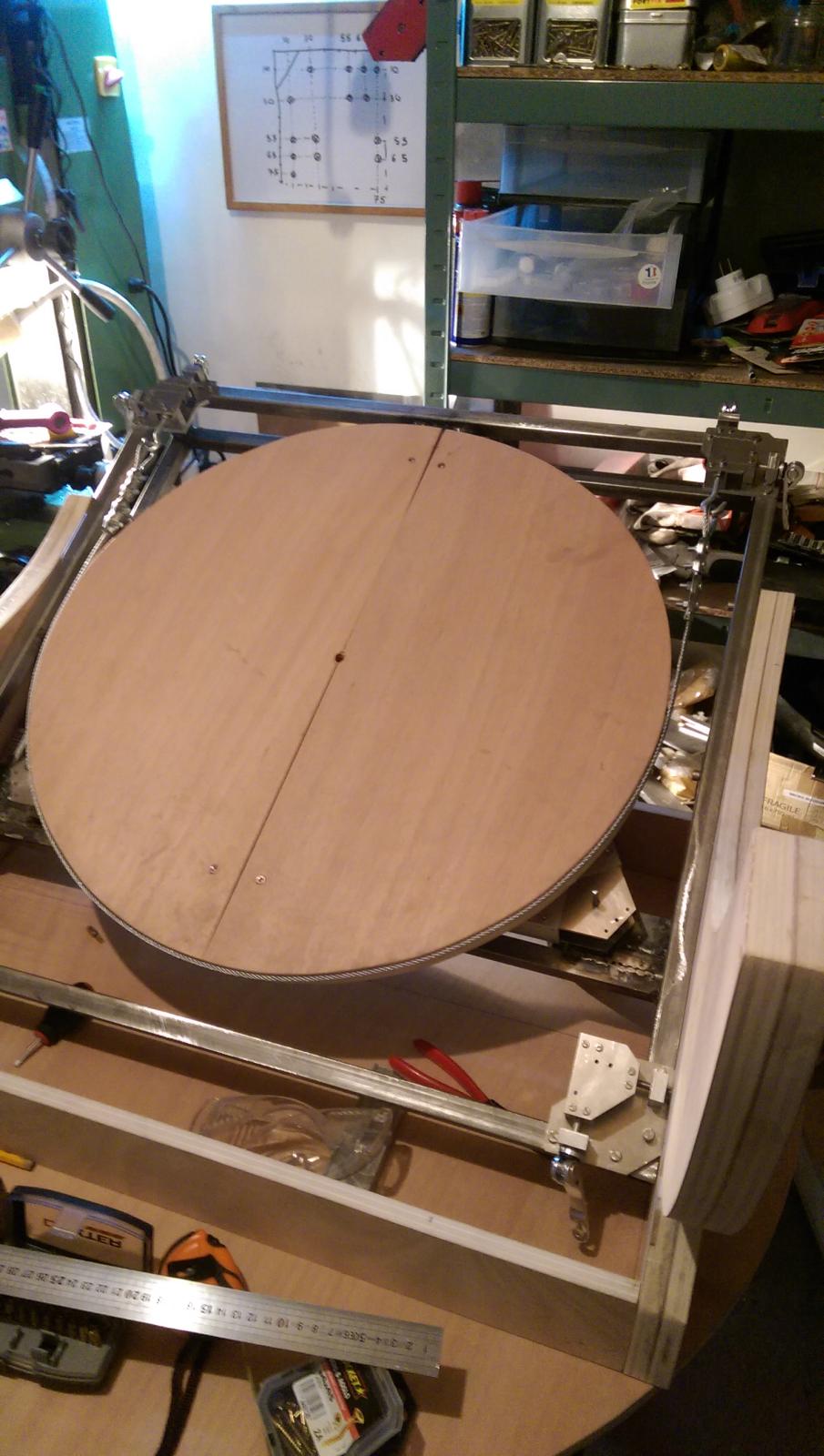
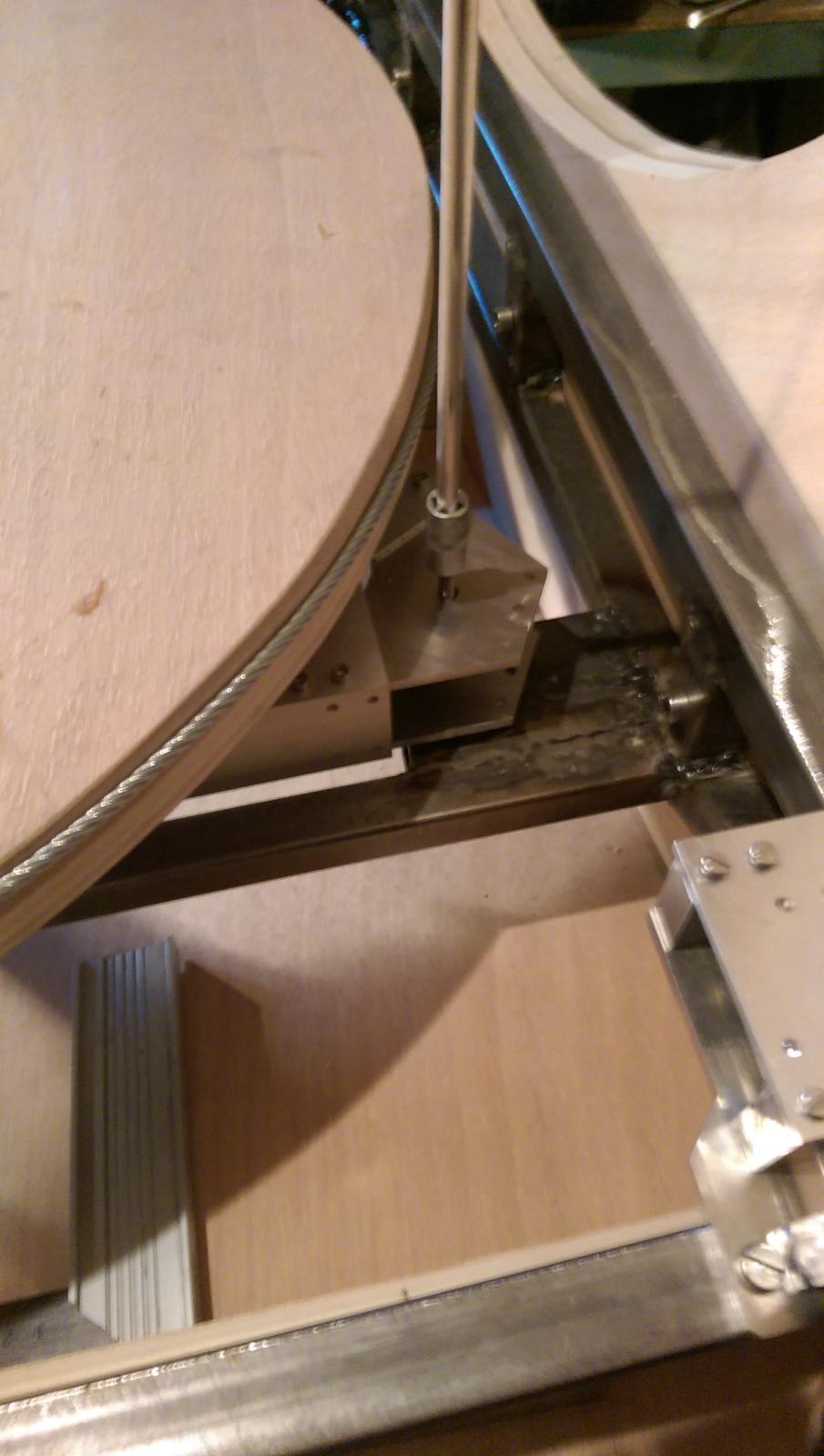
Finally, the mirror is laterally restrained by a 4mm steel cable, which runs along the edge of the mirror at its center of gravity. The cable is attached to two hooks directly mounted on the tube fittings and thus the steel frame. This achieves maximum rigidity with minimal parts.
cadre_01
cadre_02
cadre_03
cadre_04
cadre_05
cadre_06
cadre_07
cadre_08
And There You Have It…
The cage is complete and can finally accommodate the heart of the system: the 600mm primary mirror.